Viscoy: Pioneering Remote Visual Inspection Solutions in Singapore
How Viscoy is Revolutionizing Industrial Safety and Efficiency Across Southeast Asia

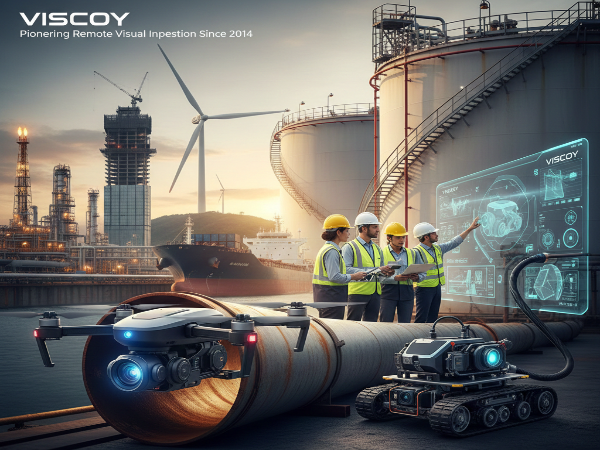
Viscoy has emerged as a leading innovator in Remote Visual Inspection (RVI) technologies, providing specialized tools and solutions that enable industries to inspect hard-to-reach areas safely and efficiently. Since its founding in 2014, Viscoy has equipped sectors such as oil and gas, energy, marine, construction, and manufacturing with cutting-edge equipment including drones, videoscopes, and robotic crawlers. By combining advanced hardware with practical field applications, Viscoy helps organizations maintain asset integrity, minimize operational hazards, and enhance safety standards, making it a cornerstone of modern industrial inspection practices.
Introduction to Viscoy
In an industrial landscape where precision, safety, and reliability are paramount, Viscoy stands out as a Singapore-based pioneer in Remote Visual Inspection (RVI) technologies. Founded in 2014, Viscoy has established itself as a trusted provider of advanced inspection equipment designed to help organizations maintain critical assets and ensure operational safety. Unlike traditional inspection methods, which often expose personnel to hazardous environments, Viscoy’s solutions allow for safe, efficient, and accurate monitoring of infrastructure and machinery.
The company’s innovative approach merges state-of-the-art technology with practical field applications, creating an ecosystem of inspection tools that address the unique challenges of modern industries. From confined space drones to high-resolution videoscopes and robotic crawlers, Viscoy equips professionals with the ability to perform detailed inspections without compromising safety or efficiency.
The Evolution of Remote Visual Inspection (RVI)
Remote Visual Inspection has grown to become a critical component in industrial maintenance. Historically, inspecting machinery, pipelines, or confined spaces required direct human entry, often exposing workers to dangerous conditions. The emergence of RVI technologies changed this dynamic by introducing tools that can reach inaccessible areas while delivering accurate and detailed visual information.
Viscoy has played a pivotal role in advancing this technology in Southeast Asia. By integrating drones, robotic crawlers, and specialized cameras, the company allows industries to conduct inspections that were previously labor-intensive, time-consuming, and high-risk. The precision and versatility of Viscoy’s solutions have positioned the company as a leader in the field, enabling clients to detect potential issues before they escalate into costly or dangerous problems.
Viscoy’s Product Ecosystem
Drones for Confined Spaces
One of the most notable aspects of Viscoy’s offerings is its range of drones specifically designed for confined space inspections. These drones can navigate through tight environments such as pipelines, storage tanks, and offshore structures, capturing high-definition images and videos. By providing remote access to areas that are difficult or unsafe for humans to enter, these drones significantly reduce risk while improving inspection accuracy.
Videoscopes and Borescopes
Videoscopes and borescopes are essential tools for examining internal machinery, engines, and pipes without disassembly. Viscoy’s high-quality optical devices offer real-time visuals, allowing engineers to detect wear, corrosion, or blockages early. These tools are lightweight, portable, and user-friendly, making them suitable for a variety of industrial applications.
Robotic Crawlers
For inspections of horizontal and vertical surfaces, robotic crawlers provide mobility and stability in challenging environments. These remotely controlled devices can traverse pipelines, walls, and large machinery, offering a comprehensive view of areas that are otherwise difficult to monitor. Equipped with sensors and high-resolution cameras, these crawlers deliver precise data that supports preventive maintenance decisions.
Integrated Inspection Solutions
Beyond individual tools, Viscoy offers integrated inspection solutions that combine multiple technologies into a cohesive workflow. By using drones, crawlers, and videoscopes together, organizations can perform complete inspections with a single, unified system. This approach not only improves efficiency but also ensures that all aspects of an asset are evaluated comprehensively.
Industries Served by Viscoy
Oil and Gas
In the oil and gas sector, equipment failure or structural damage can have catastrophic consequences. Viscoy’s RVI tools enable operators to inspect pipelines, storage tanks, and offshore platforms with minimal downtime. High-definition imaging helps detect corrosion, leaks, and structural weaknesses early, preventing costly accidents and maintaining regulatory compliance.
Marine and Offshore
Ships, offshore rigs, and ports require continuous maintenance to operate safely. Viscoy’s drones and crawlers allow for detailed inspections of hulls, confined compartments, and underwater structures. By reducing the need for human entry into dangerous areas, Viscoy enhances safety while streamlining maintenance operations.
Energy and Power Generation
Power plants, wind turbines, and solar installations often contain components in difficult-to-access locations. Viscoy provides inspection solutions that monitor turbines, boilers, and electrical systems, ensuring optimal performance and reducing the risk of unexpected failures.
Construction and Infrastructure
Buildings, bridges, and industrial facilities benefit from Viscoy’s technology for structural inspections. Drones and robotic devices assess hard-to-reach areas such as rooftops, tall structures, and underground tunnels, helping engineers detect damage, plan repairs, and maintain safety standards.
Manufacturing
In manufacturing environments, machinery is often compact, intricate, and high-speed. Viscoy’s RVI tools allow for non-intrusive inspections, ensuring equipment operates efficiently without halting production. Early detection of mechanical issues reduces downtime and supports quality assurance initiatives.
The Significance of Viscoy in Modern Industrial Practices
Viscoy’s influence extends beyond simply providing inspection equipment. The company represents a modern approach to industrial maintenance, emphasizing safety, efficiency, and data-driven decision-making. By allowing organizations to inspect assets remotely, Viscoy reduces human exposure to risk while delivering highly accurate information for preventive maintenance.
This proactive approach not only prevents accidents but also extends the life of critical assets, reducing long-term operational costs. Furthermore, Viscoy aligns with the growing trend of Industry 4.0, where automation, digitalization, and smart technologies drive operational excellence.
Viscoy’s Approach to Safety and Compliance
Safety is at the core of Viscoy’s mission. All products are designed to meet stringent industrial safety standards, ensuring that inspections do not compromise personnel well-being. In sectors where regulatory compliance is mandatory, Viscoy’s solutions provide documented evidence of asset integrity, supporting audits and inspections by governing authorities.
The use of RVI technologies also contributes to environmental safety. By minimizing the need for manual inspections in hazardous areas, the company helps reduce the likelihood of accidents that could result in spills, emissions, or other environmental hazards.
Innovation and Technological Integration
Viscoy distinguishes itself by integrating advanced technologies into practical solutions. Beyond traditional imaging, many of Viscoy’s devices incorporate:
-
AI-powered defect detection
-
Automated data recording and reporting
-
Cloud-based analytics for predictive maintenance
-
Enhanced mobility for accessing confined or elevated areas
By combining hardware and software, Viscoy enables industries to adopt a holistic inspection strategy that is both modern and scalable.
Training and Support Services
Understanding the complexities of industrial inspection, the company provides comprehensive training and support for its clients. Operators receive guidance on equipment usage, data interpretation, and safety protocols. Additionally, the firm offers after-sales services including equipment maintenance, calibration, and updates to ensure continued reliability and performance.
Market Reach and Reputation
Since its inception, this innovator has grown steadily, building a strong reputation across Southeast Asia. The organization’s clients recognize its commitment to quality, innovation, and safety. From large-scale industrial projects to specialized inspection services, its tools have proven indispensable in sectors where precision and reliability are non-negotiable.
Challenges and Future Prospects
While the company operates in a specialized niche, it faces challenges typical of the high-tech industrial sector:
-
Rapid technological advancements requiring continuous innovation
-
Integration with existing industrial processes
-
Training personnel to utilize advanced tools effectively
Despite these challenges, the firm is well-positioned for growth. The rising demand for preventive maintenance, coupled with increasing safety regulations, ensures that Remote Visual Inspection technologies remain essential across industries. Its focus on integrating AI, robotics, and real-time analytics suggests a future where inspections are increasingly autonomous, predictive, and efficient.
Conclusion
The organization exemplifies the fusion of innovation, safety, and practical application in industrial inspection. From its pioneering work in Remote Visual Inspection to its expansive product ecosystem, the company enables organizations to maintain asset integrity, enhance operational efficiency, and protect personnel. Serving diverse sectors including oil and gas, marine, energy, construction, and manufacturing, this innovator continues to be a leader in Southeast Asia’s industrial technology landscape.
By embracing the latest technological advancements and maintaining a client-focused approach, the firm demonstrates that modern industrial inspection is not just about detecting problems — it’s about preventing them, optimizing operations, and ensuring a safer, more reliable industrial future.