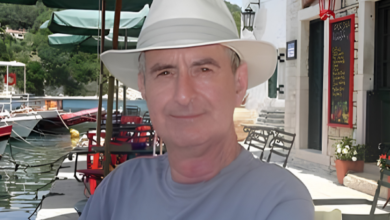
Sue Armstrong: Pioneering Science, Health, and Global Development Journalism
Exploring the Life, Career, and Influence of a Leading Science Communicator


Sue Armstrong is a highly respected science writer and broadcaster with a career spanning over 30 years, specializing in health, science, and international development. Through her books, documentaries, and journalistic work, Armstrong has consistently translated complex scientific concepts into accessible, engaging narratives for global audiences. Her work not only informs public understanding but also highlights the human dimension of health and science, making her one of the most influential voices in modern science communication.
Introduction: Who is Sue Armstrong?
Sue Armstrong has spent more than three decades at the forefront of science and health communication, bridging the gap between complex research and the public. Based in Edinburgh, Scotland, she is renowned for her freelance journalism that covers topics ranging from global health crises to the biology of ageing. Armstrong’s approach combines rigorous scientific reporting with compelling storytelling, enabling her audience to understand both the science and its societal impact.
Throughout her career, she has collaborated with major media outlets, including New Scientist and the BBC, as well as international organizations like the World Health Organization (WHO) and UNAIDS. Her ability to convey critical health and science topics in an accessible manner has earned her a global reputation as a leading science communicator.
Early Life and Education
Details of Sue Armstrong’s early life are relatively private, reflecting her focus on professional rather than personal publicity. While her exact birthdate is not publicly documented, Armstrong’s career trajectory suggests that she was born in the late 1950s or early 1960s, making her approximately in her early to mid-60s. Information about her family life is also limited, as Armstrong has chosen to maintain a private personal profile.
Her education laid the foundation for a career in science journalism. With a deep interest in both science and communication, she cultivated the skills necessary to translate complex scientific concepts for public understanding. Her early work as a correspondent in Brussels and South Africa gave her a firsthand perspective on international development challenges, a focus that would define much of her freelance work.
Career Overview: Freelance Journalism and Broadcasting
Sue Armstrong’s freelance career began over 30 years ago and has spanned multiple continents and fields of expertise. Her reporting encompasses topics such as infectious diseases, public health, global development, ageing, and medical research. Armstrong has reported from countries severely affected by health crises, giving her writing a depth and authenticity that resonates with readers and audiences.
Work with Media Outlets
Armstrong has contributed to leading publications such as New Scientist, where her articles dissect complex scientific topics for general audiences. She has also produced documentaries and radio programs for the BBC, particularly on Radio 4, where her work ranges from science storytelling to human interest features on public health issues. Her journalism consistently merges factual accuracy with narrative clarity, a combination that sets her apart in the field of science communication.
Global Health and Development Focus
A significant portion of Armstrong’s career has been devoted to international health reporting. She has worked extensively with organizations like WHO and UNAIDS, providing reports, feature articles, and consultancy on health communication strategies. These assignments have taken her to regions such as Africa, Asia, and Latin America, where she reports on pressing issues such as HIV/AIDS, maternal health, and healthcare delivery in resource-limited settings.
Her reporting goes beyond statistics, often including the voices of patients, health workers, and communities, making her work both informative and deeply human.
Books by Sue Armstrong
Armstrong has authored books that have become benchmarks in science writing for the general public. Her works combine meticulous research with clear, engaging prose.
p53: The Gene That Cracked the Cancer Code
This book explores the discovery of the p53 gene, which plays a critical role in controlling cell growth and preventing cancer. Armstrong explains complex molecular biology in a way that is accessible to readers without a scientific background while emphasizing the human impact of cancer research.
Borrowed Time: The Science of How and Why We Age
In this book, Armstrong investigates the biology of ageing. She examines scientific theories, longevity research, and societal implications, offering insights into how humans understand and respond to the ageing process. Through interviews with leading researchers, she provides readers with a comprehensive understanding of why we age and how science is seeking to intervene.
Both books have been praised for their clarity, depth, and ability to make scientific concepts relatable to everyday life.
Sue Armstrong’s Style and Impact
Sue Armstrong’s unique contribution to science communication lies in her ability to humanize science. She combines rigorous research with compelling storytelling, ensuring that her audiences not only understand the facts but also appreciate their real-world relevance.
Her reporting emphasizes context, whether she is exploring cutting-edge medical research or the global response to health crises. Armstrong’s approach fosters a deeper understanding of science, highlighting both opportunities and ethical challenges inherent in scientific discovery.
Her documentaries and radio work often feature personal stories of scientists, patients, and communities affected by health issues, making science relatable and engaging.
Public Speaking and Influence
Armstrong’s expertise extends to keynote speaking at conferences and events focused on science, health, and global development. She is recognized for her ability to communicate complex topics to diverse audiences, from policymakers to the general public. Her talks often explore the intersection of scientific discovery, human experience, and policy implications, reflecting her career-long commitment to bridging gaps in understanding.
She is frequently invited to speak internationally, sharing insights from her extensive reporting on global health challenges and the ethical considerations of scientific research.
Sue Armstrong Age, Family, and Personal Life
As noted, Sue Armstrong has kept her personal life private. While her exact age is not publicly verified, it is generally estimated that she is in her early to mid-60s. Details regarding her family — parents, spouse, or children — are not disclosed in public records, reflecting her focus on professional contributions rather than personal publicity.
This privacy aligns with Armstrong’s professional approach: letting her work and reporting speak for her impact, rather than personal details.
Net Worth and Professional Recognition
Sue Armstrong’s net worth is not publicly documented. As a freelance journalist, broadcaster, author, and speaker, her income is likely derived from a combination of book sales, media commissions, and speaking engagements. While precise financial figures are unavailable, Armstrong’s professional standing suggests a successful career built on decades of high-profile work in journalism and science communication.
Wikipedia and Public Presence
Currently, Sue Armstrong does not have a dedicated Wikipedia page, though her biography appears in publisher sites, speaker bureaus, and professional profiles. Despite the lack of a Wikipedia entry, Armstrong’s influence in science and health communication is well-established through her books, media contributions, and global health collaborations. Her work has reached a worldwide audience and continues to shape understanding in science journalism and public health reporting.
Legacy and Contribution to Science Communication
Sue Armstrong’s legacy is defined by the impact of her storytelling. Her work educates, informs, and inspires audiences around the world. By translating complex scientific ideas into accessible narratives, she has contributed significantly to public understanding of science and health issues.
She demonstrates the importance of accurate, ethical, and human-centered science communication, showing how reporting can bridge the gap between research and society. Her decades of work serve as a model for aspiring journalists, writers, and broadcasters in the field of science and health.
Armstrong’s work underscores a key principle: that science is not only a technical pursuit but also a human endeavor with profound societal consequences. Through her books, articles, and documentaries, she ensures that the stories of science are not just told but felt and understood by audiences worldwide.
Conclusion
Sue Armstrong is a distinguished figure in science, health, and development communication. With a career spanning more than 30 years, she has informed global audiences about the most pressing issues in science and health, all while maintaining professional integrity and a commitment to accuracy.
Though her personal life remains largely private — including her age, family, and net worth — her professional contributions are highly visible and impactful. Armstrong’s work continues to inspire journalists, scientists, and the public, reinforcing the importance of clear, responsible, and human-centered science communication.
Her absence from Wikipedia does not diminish her reputation; rather, her legacy is reflected in the thousands of people worldwide who have learned from, been inspired by, or collaborated with her throughout her distinguished career.
Sue Armstrong exemplifies the power of science communication done right: accurate, compelling, and deeply human.