Professional Clay Pigeon Throwers for Skeet Competitions – Achieving Consistent and Repeatable Flight Trajectories

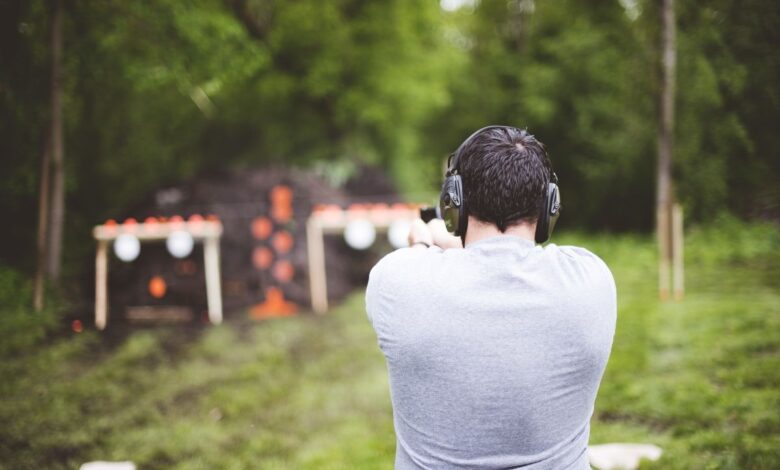
Consistent and repeatable clay target flight is the foundation of fair, high‑level Skeet competition. Even the best shooters cannot perform at their peak if targets vary in height, speed, or angle from shot to shot. Professional clay pigeon throwers are therefore not just accessories but core elements of competition infrastructure.
This article explains how professional Skeet throwers are designed, set up, and maintained to deliver reliable, repeatable target trajectories – and what to look for when choosing equipment for a club or commercial range.
What “Consistent and Repeatable” Means in Skeet
In Skeet, consistency is not a vague quality; it is a precise, measurable standard. A professional setup should ensure that clay targets leave the trap at a stable, predictable speed, the launch angle and elevation stay within tight tolerances, the flight path crosses the same reference point in the air shot after shot, and any programmed variation (e.g., oscillation) is controlled, intentional, and repeatable.
In practice, that means a shooter can step onto the station and expect targets that behave identically to those seen in previous rounds. When this is achieved, results reflect skill, not equipment randomness.
Key Design Features of Professional Clay Pigeon Throwers
Modern professional Skeet throwers are specialized machines engineered for precision and heavy duty use. The most important design elements include a rigid, stable frame that minimizes vibration and movement during launch, a powerful and controlled throwing arm driven by a spring or motor‑assisted system that accelerates smoothly and releases the clay cleanly at the same point each time, and adjustable launch geometry allowing precise control over horizontal angle (left/right spread) and vertical angle (elevation).
Additionally, quality machines feature a reliable clay feed and carousel system with well‑designed carousels or magazines and smooth feed chutes that avoid jolts and impacts, reducing breakages and ensuring every target starts from the same position on the arm. Finally, stable power and control systems with robust control electronics are essential for fully automatic competition throwers, where remote controls, voice‑activated systems, and range automation must all trigger the machine with minimal delay and high repeatability.
The WASPA™ Eagle L240 exemplifies these core principles. As a fully automatic and professional clay thrower designed specifically for shooting competition, it ensures repeatable flight paths crucial during Skeet events. The machine features a lightweight yet durable construction with precisely cut components that are powder painted or galvanized for longevity. Its vertical throwing angle is adjustable in the range of 8–26 degrees, with the option to increase this by a further 65 degrees through the optional P65 Base Plate. Manual adjustment of both vertical and horizontal throwing angles makes it adaptable to various competition requirements while maintaining the consistency essential for fair and demanding Skeet shooting.
Main Factors Affecting Target Consistency
Even a top‑tier thrower can produce inconsistent flights if it is poorly configured or maintained. The spring or motor power setting determines the energy delivered to the clay and therefore its launch speed, distance, and height – incorrect or drifting tension leads to targets that fall short, overshoot, or rise too high. Small changes of a degree or two in launch angle and elevation can move the crossing point significantly, while variations in clay weight, balance, or structural integrity affect flight behavior and require uniform, competition‑grade targets stored correctly to avoid moisture degradation.
Mechanical wear and contamination – including dust, fragments of broken clays, dried grease, and worn rubber on the throwing arm – gradually change how the arm grips and releases the target. Finally, while wind will always influence targets, a properly set machine provides a stable baseline, so the only variable is the weather, not the hardware.
How to Set Up a Skeet Thrower for Repeatable Flight Paths
Below is a practical, competition‑oriented workflow for configuring a professional thrower for Skeet use.
1. Secure placement and leveling
Mount the machine on a stable, vibration‑resistant base, level the frame carefully using a spirit level, and ensure all mounting bolts are tightened to specification. A trap that shifts or rocks under recoil can never stay consistent.
2. Set the basic elevation and horizontal alignment
Adjust the vertical angle to match the desired height of the crossing point, align the horizontal angle so that the target crosses the intended reference line (e.g., the center of the station layout), and lock all adjustment points securely to prevent creep.
3. Calibrate throwing power (spring tension/motor setting)
Start from the manufacturer’s recommended baseline setting, conduct test throws to confirm distance and height visually, and fine‑tune power in small increments until clays consistently reach the required break point downrange. For high‑level ranges, this is often supported by measuring distance and/or using speed guns for more exact calibration.
4. Verify repeatability over multiple throws
Launch a series of test clays (e.g., 25–50 targets) without changing any settings and observe whether the flight path, height, and distance remain within an acceptable narrow band. If minor drifts appear, recheck mounting bolts, spring tension, angle lock points, and cleanliness of the arm and carousel.
5. Integrate with range control systems
For automated facilities, sync the thrower with voice‑release or remote control systems, check trigger delay to ensure timing is consistent, and test all programmed sequences (singles, doubles, oscillation patterns) for both correctness and repeatability.
Maintenance Practices That Preserve Consistency
Consistency is not only about initial setup; it is about keeping the machine at that standard day after day, season after season. Regular cleaning removes clay fragments, dust, and grit from the throwing arm, carousel/magazine, and feed path, preventing irregular friction and misfeeds. Scheduled lubrication of bearings, pivots, and critical moving joints according to the manufacturer’s timetable using recommended greases and oils is essential.
Inspection of wear components, including rubber strips or pads on the throwing arm, springs, and tensioning components, should check for cracks, hardening, and loss of elasticity, with replacement before noticeable inconsistency occurs. Periodically verify that bolts, clamps, and angle adjusters have not loosened under vibration, as even small amounts of play can grow into serious deviations over time. Finally, before competitions, ranges should run a series of test targets, confirm angle, height, and distance visually, and make fine corrections as needed. With such a maintenance regime, a quality thrower can deliver extremely stable performance for many years.
Choosing the Right Professional Thrower for Skeet
Different types of throwers suit different use cases, from small clubs to fully commercial facilities. Consider your intended use, as training and recreational use can often be covered by simpler, manually adjustable traps, while formal or high‑frequency competitions benefit from fully automatic, programmable machines. Evaluate your range layout and discipline mix – if your facility supports multiple disciplines (Skeet, Trap, Sporting), choose versatile machines with adjustable or programmable flight patterns. Finally, assess the degree of automation you need, ranging from manually adjusted single‑angle machines to units with automatic horizontal oscillation to advanced models with motorized horizontal and vertical movement for fully variable presentations.
Professional Solutions from WaspaSport
For ranges and clubs seeking professional‑grade consistency in Skeet and other clay disciplines, WaspaSport offers a specialized portfolio of clay pigeon throwers and related shooting range equipment. The product range includes compact traps designed for small clubs and novice shooters, optimized for easy transport and setup, fully automatic clay throwers engineered for competition environments where constant and repeatable clay flight paths are mandatory; advanced multi‑motor systems with dedicated motors for horizontal and vertical movement, enabling a full spectrum of clay presentations; and specialized machines for mini clays or rolling “rabbit” targets that add variety while delivering predictable, controlled flight or roll paths.
Combined with premium clay targets and range automation technology, this integrated offering allows clubs and commercial facilities to build modern, efficient, and highly consistent shooting environments tuned to their exact needs.
Why Professional Equipment Matters
Professional clay pigeon throwers are the unseen backbone of Skeet competition. When correctly chosen, installed, calibrated, and maintained, they deliver consistent and repeatable flight trajectories, ensure fair and comparable conditions for all shooters, support reliable training feedback for skill development, and enhance the professional image and operational efficiency of a range.
For any club or commercial facility that takes Skeet seriously, investing in high‑quality, well‑engineered throwers – and caring for them properly – is one of the most impactful decisions that can be made to elevate both performance and shooter satisfaction.