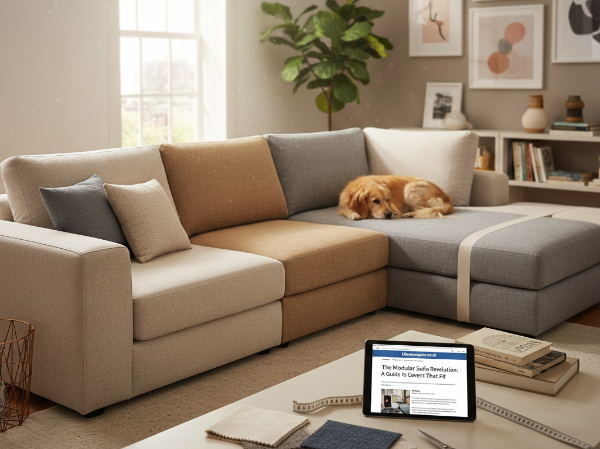
Modular sofas have transformed how people approach living room furniture. Unlike traditional fixed-configuration sofas, modular systems consist of separate components that combine in various arrangements. This flexibility addresses modern living realities: changing spaces, evolving households, and the need for furniture that adapts rather than becoming obsolete. However, this adaptability creates unique challenges when selecting covers, as solutions must accommodate reconfiguration while maintaining proper fit and appearance.
The popularity of modular seating reflects broader shifts in how people live. Smaller urban apartments demand space efficiency. Frequent relocations require furniture that fits various layouts. Remote work necessitates multi-functional spaces. Modular sofas address these needs elegantly, offering flexibility that traditional furniture cannot match. Yet this flexibility means standard slipcover approaches often fail, requiring thoughtful consideration of how covers interact with modular design.
Understanding Modular Sofa Systems
Modular sofas break seating into components: corner pieces, armless sections, chaises, ottomans, and end units with arms. These elements connect through various mechanisms, from simple positioning to integrated brackets. The configuration possibilities prove nearly endless, allowing customization for specific spaces and uses.
This modularity provides genuine advantages over traditional sofas. A three-seat sofa that doesn’t fit your next apartment becomes a two-seat plus chair. An L-shaped sectional reconfigures to a straight sofa when you move. Storage ottomans add or remove based on current needs. This adaptability protects furniture investment across life changes that would otherwise require replacement.
However, modularity complicates covering. Traditional slipcovers assume fixed furniture dimensions. Modular pieces require covers that work individually yet create a cohesive appearance when configured together. The connections between modules create gaps and transitions that covers must accommodate without looking awkward or compromising fit.
Contemporary approaches to modular furniture design emphasize this balance between flexibility and aesthetic cohesion, recognizing that truly functional modular systems must maintain visual unity despite their adaptable nature.
The Kivik System as Reference Point
IKEA’s Kivik series exemplifies modular sofa design done well. Available components include single seats, loveseats, three-seats, corner sections, chaises, and ottomans. These pieces work independently or combine into configurations from compact two-seaters to expansive sectionals accommodating a dozen people.
Kivik’s popularity stems from several factors beyond price. Proportions suit most spaces without overwhelming or underwhelming. Comfort levels satisfy most users without extreme softness or firmness. Styling remains neutral enough to work with various aesthetics. Most importantly, the system genuinely functions modularly, with pieces that reconfigure easily and look intentional in various arrangements.
This widespread adoption creates substantial aftermarket demand for custom covers. While Ikea offers replacement covers, options remain limited in color and fabric. Third-party manufacturers address this gap, but quality and fit vary dramatically. Understanding how to choose the right Kivik sofa slipcovers requires attention to factors that standard shopping doesn’t emphasize.
Form and Fit Considerations
Proper fit determines whether covers enhance or detract from furniture’s appearance and function. Several factors affect fit quality for modular sofa covers.
Module-specific design proves essential. A corner section has different dimensions and shape from a straight section. Covers designed for specific modules fit properly, while generic covers create bunching, gaps, and an awkward appearance. When evaluating covers, confirm they’re manufactured for your exact modules, not just the sofa series generally.
Seam placement affects both fit and appearance. Seams positioned at furniture transitions look intentional and minimize strain. Poorly placed seams create visual breaks in the wrong locations and experience excessive tension that causes premature failure. Quality covers position seams thoughtfully based on the furniture structure.
Ease allowance, the extra fabric beyond exact furniture dimensions, must balance competing needs. Too little ease creates tension that distorts appearance and strains fabric. Too much creates a loose, sloppy appearance with wrinkles and sagging. Proper ease varies with fabric type, as stretchy materials need less than rigid weaves.
Corner treatment especially challenges modular sofa covers. Corners experience complex three-dimensional shaping that flat fabric struggles to accommodate. Quality covers use techniques like darts, gussets, or elastic gathering to create smooth corners without excess fabric bunching or visible tension lines.
Connection zones between modules require special attention. Covers must accommodate the gaps and hardware where modules connect without creating visual breaks or bunching. Some cover systems treat each module completely separately, while others use continuous fabric with strategic pleating or tucking at connections.
Securing Methods and Stability
Covers that shift and slip constantly frustrate users and look messy. Several securing methods address this, each with advantages and limitations.
Elastic edges provide simple, economical securing. Elastic sewn into the cover perimeters holds fabric in place through tension. This works well for simple shapes but struggles with complex modular configurations. Elastic can lose tension over time, requiring replacement or adjustment.
Ties and straps offer adjustable securing that accommodates slight dimension variations. Fabric strips tie around legs or connect under furniture, pulling covers taut. This method allows precise adjustment but requires more installation effort than elastic. Ties must be positioned strategically to avoid creating visible distortion or uncomfortable bumps.
Hook and loop (Velcro) fasteners create strong, adjustable connections. Strips attached to covers and furniture create secure bonds that resist shifting. This proves particularly effective for modular sofas where modules connect, as fasteners can bridge gaps. However, the application requires either permanent furniture modification or creative temporary attachment.
Foam grips and non-slip materials use friction rather than mechanical fastening. Silicone or rubberized strips on the cover’s underside grip furniture fabric, resisting movement without requiring ties or elastic. This works best with specific furniture fabric types and may not suit all situations.
Zipper systems provide the most secure fit, enclosing cushions completely. Covers essentially become replacement upholstery rather than slipcovers. This creates the cleanest appearance but sacrifices easy removal for cleaning. Not all modular systems suit zipper approaches due to component shapes and connection methods.
Fabric Selection for Modular Applications
Fabric choice dramatically affects both cover performance and appearance. Modular sofas create specific fabric requirements beyond standard upholstery considerations.
Stretch versus non-stretch fabrics offer different advantages. Stretch fabrics accommodate slight dimension variations and create smooth surfaces over complex shapes. However, they show furniture contours more obviously, including imperfections. Non-stretch fabrics hide imperfections better but require a more precise fit and sophisticated pattern design to avoid bunching.
Durability requirements increase for modular sofas because reconfiguration creates additional wear. Covers experience more handling, stretching, and friction than those on fixed furniture. Fabrics must withstand this extra stress without premature failure. Tightly woven materials typically outlast loose weaves in modular applications.
Color and pattern interact with the modular design distinctively. Large patterns must align across modules to avoid jarring visual breaks. Small patterns or solids prove more forgiving. Very light or very dark colors show soiling and wear more obviously on heavily used modular seating than mid-tones.
Texture affects both aesthetics and performance. Smooth fabrics highlight any fit imperfections, while textured weaves forgive minor issues. However, rough textures might catch on clothing or feel uncomfortable. Balance these factors based on household priorities and sensitivities.
Weight and drape influence how covers conform to furniture shapes. Heavy fabrics resist bunching but might not follow complex curves smoothly. Light fabrics drape beautifully but shift more easily. Modular applications often benefit from medium-weight fabrics that balance these characteristics.
Installation and Maintenance Realities
Even excellent covers prove frustrating if installation requires excessive time or expertise. Similarly, maintenance demands affect long-term satisfaction significantly.
Installation complexity varies dramatically between cover designs. Simple stretch covers slip on relatively easily, while those with multiple securing points demand patience and sometimes two people. Consider realistic household capabilities when evaluating options. Covers requiring professional installation for every washing prove impractical for most homes.
Removal frequency for cleaning affects practical cover choice. Households with children or pets need covers that remove and reinstall easily for frequent laundering. Adult households with careful habits might tolerate more complex securing methods in exchange for superior fit and appearance.
Washing requirements influence the total cost of ownership. Covers requiring professional cleaning cost substantially more to maintain than machine-washable options. Similarly, covers demanding special detergents or gentle cycles create ongoing inconvenience. Evaluate these factors alongside the purchase price for accurate cost comparison.
Durability through cleaning cycles matters significantly. Covers that shrink, fade, or distort after washing prove false economy regardless of initial cost. Quality fabrics and construction maintain dimensions and appearance through numerous launderings, while cheap alternatives might survive only a few cycles.
Stain resistance affects maintenance burden dramatically. Treated fabrics resist spills long enough for blotting and cleaning before stains set. Untreated materials absorb liquids immediately, often creating permanent marks. This difference proves especially valuable for light-colored covers in active households.
Aesthetic Integration With Room Design
Covers affect room’s appearance far beyond the sofa itself. Several factors determine how successfully covers integrate into broader interior design.
Color relationships with existing elements create either harmony or discord. Covers can complement wall colors, echo accent colors, or provide contrast. None of these approaches is inherently correct, but decisions should be intentional rather than accidental. Consider bringing paint chips or fabric samples when shopping to ensure compatibility.
Style consistency matters for cohesive design. Casual slipcover aesthetic suits relaxed interiors, but looks wrong in formal settings. Tailored covers with a precise fit appear more refined but might seem stiff in casual spaces. Match cover style to room formality for best results.
The pattern scale must suit both the sofa size and the room scale. Large patterns on small sofas overwhelm. Tiny patterns disappear on large sectionals. Similarly, pattern scale should relate to room size, with larger spaces accommodating bolder patterns than small rooms.
Texture adds visual interest and tactile dimension. However, texture must harmonize with other room elements. Mixing too many competing textures creates chaos, while too little variation feels flat. Consider existing textile textures when selecting cover fabrics.
Making the Right Choice
Selecting covers for modular sofas requires balancing multiple factors simultaneously. Prioritize based on your specific situation and preferences.
Households with children or pets should emphasize durability and washability over perfect aesthetic refinement. Covers that maintain appearance through heavy use and frequent cleaning provide better value than delicate options requiring excessive care.
Frequently reconfigured modular systems need covers that install and remove easily. Complex securing methods prove frustrating when you rearrange furniture regularly. Simple slip-on or elastic-secured covers work better in these situations despite potentially a less perfect fit.
Style-focused users might accept more maintenance demands or installation complexity in exchange for a superior appearance. This proves reasonable when aesthetic priorities outweigh convenience considerations, though be realistic about maintenance follow-through.
Budget constraints require an honest assessment of priorities. Sometimes investing more in durable, well-fitting covers proves more economical than replacing cheap alternatives repeatedly. Other times, adequate budget options serve perfectly well for current needs.
The right modular sofa covers balance fit, durability, aesthetics, and maintenance requirements for your specific situation. Understanding these factors allows informed decisions that enhance rather than compromise your furniture investment.