Formulation Chemistry: The Science Behind Creating Perfect Mixtures
Understanding Formulation Chemistry and Its Applications

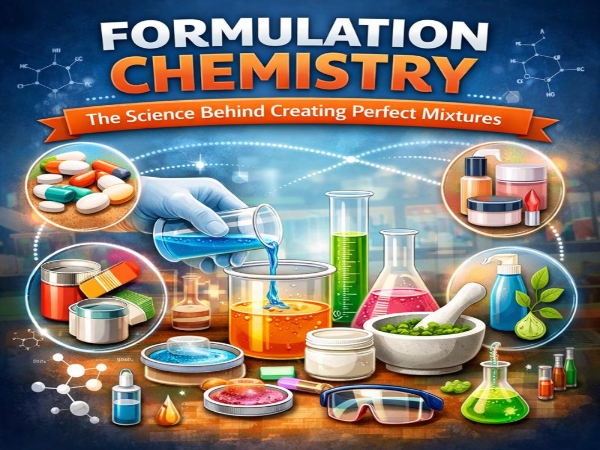
Formulation chemistry is the scientific art of mixing substances in precise amounts to create a product with desired properties, without causing chemical reactions among the ingredients. This branch of chemistry plays a vital role in producing everything from medicines and cosmetics to paints and cleaning agents. The goal of formulation chemistry is to combine components in such a way that the final product is stable, safe, effective, and tailored to meet specific functional requirements. By carefully selecting and balancing ingredients, formulation chemists can control properties such as texture, stability, appearance, performance, and usability, ensuring that each product serves its intended purpose efficiently.
What Is Formulation Chemistry?
Formulation chemistry is more than just mixing substances together. It involves understanding how different components interact physically and chemically, selecting the right proportions, and designing a mixture that performs a specific function. Unlike traditional chemical reactions, where new compounds are created, formulation chemistry relies on combining materials that retain their individual chemical identities. The resulting product, called a formulation, is carefully engineered to meet precise criteria such as viscosity, stability, appearance, and effectiveness.
Formulation chemistry is essential in industries where product performance, safety, and consistency are critical. Without careful formulation, medicines might lose their efficacy, cosmetics may irritate skin, and paints could separate or degrade over time.
Key Principles of Formulation Chemistry
Ingredient Selection: Choosing the right ingredients is the foundation of formulation chemistry. Each component has a specific role, such as active functionality, stability, texture, or preservation. Formulators evaluate how ingredients will behave in combination and how they contribute to the overall performance of the final product.
Proportion and Accuracy: Precise measurement of ingredients is crucial. Small deviations in quantity can alter the physical properties, stability, or effectiveness of the formulation. Accurate ratios ensure that the product consistently meets its intended specifications.
Stability and Compatibility: Ingredients must be compatible to prevent separation, sedimentation, or degradation over time. Formulation chemists conduct extensive testing to ensure that the mixture remains stable throughout its shelf life.
Performance Optimization: A successful formulation delivers optimal performance. Whether it is a shampoo that lathers properly, a tablet that dissolves at the right rate, or a paint that spreads smoothly, the final product must meet functional expectations.
Safety and Compliance: Formulations must be safe for their intended use. Chemists adhere to regulations, toxicity limits, and safety guidelines to ensure that products do not harm consumers or the environment.
Applications of Formulation Chemistry
Formulation chemistry is applied across numerous industries. Each sector relies on specialized formulations to produce products that are effective, safe, and user-friendly.
Pharmaceuticals
In the pharmaceutical industry, formulation chemistry ensures that drugs are delivered efficiently and safely. Tablets, capsules, creams, and liquid medications require precise formulation to achieve correct dosage, stability, and bioavailability. Excipients are added to improve drug absorption, shelf life, and patient compliance.
Cosmetics and Personal Care
Cosmetic products such as lotions, shampoos, creams, and deodorants depend heavily on formulation chemistry. Chemists balance ingredients to achieve the desired texture, fragrance, and skin compatibility. Stability tests are conducted to prevent separation, rancidity, or microbial contamination.
Paints and Coatings
Paints and coatings require formulation chemistry to combine pigments, binders, solvents, and additives into a product that spreads easily, dries evenly, and resists fading. The right formulation ensures color consistency, durability, and resistance to environmental conditions.
Household Chemicals
Detergents, cleaners, and polishes are formulated to maximize cleaning efficiency while minimizing damage to surfaces. Surfactants, solvents, and stabilizers are mixed in precise proportions to achieve the desired cleaning power and stability.
Agrochemicals
Fertilizers, pesticides, and herbicides rely on formulation chemistry to ensure that active ingredients are delivered effectively. Formulations improve stability, reduce environmental impact, and enhance ease of application.
Food and Beverage
In the food industry, formulation chemistry is used to design flavors, textures, preservatives, and nutritional content. Products such as sauces, beverages, and processed foods are carefully formulated to maintain quality and safety.
Techniques Used in Formulation Chemistry
Formulation chemists use a variety of techniques to create stable and effective mixtures:
Mixing and Homogenization: Ensures even distribution of all ingredients and uniform texture.
Emulsification: Combines liquids that normally don’t mix, such as oil and water, to form stable emulsions.
Solubilization: Dissolves solid or liquid ingredients into solvents to achieve the desired concentration.
Stabilization: Uses additives like preservatives, antioxidants, and stabilizers to prevent degradation.
Testing and Optimization: Includes shelf-life testing, viscosity measurements, pH evaluation, and sensory assessment to fine-tune formulations.
Importance of Formulation Chemistry
Formulation chemistry is crucial because it ensures that products are:
-
Effective: Delivers intended benefits to the consumer.
-
Stable: Maintains performance, appearance, and safety over time.
-
Safe: Complies with regulations and minimizes risks to users.
-
User-friendly: Easy to apply, consume, or use in daily life.
-
Cost-effective: Optimizes ingredient use without compromising quality.
Without proper formulation, even high-quality ingredients may fail to produce a functional, usable product.
Role of a Formulation Chemist
Formulation chemists are specialists who design, develop, and optimize products. Their responsibilities include:
-
Selecting suitable ingredients.
-
Measuring and mixing precise quantities.
-
Conducting tests for stability, efficacy, and safety.
-
Adjusting formulations based on performance feedback.
-
Scaling up laboratory formulations to mass production.
These chemists combine scientific knowledge with creativity, problem-solving, and attention to detail to produce products that meet industry standards and consumer expectations.
Challenges in Formulation Chemistry
Formulation chemistry is not without challenges. Chemists must tackle:
-
Ingredient incompatibility: Certain chemicals may separate or interact negatively.
-
Environmental stability: Products must withstand temperature changes, humidity, and light exposure.
-
Regulatory compliance: Formulations must adhere to strict safety and labeling regulations.
-
Consumer expectations: Products must deliver performance, texture, and aesthetic appeal.
-
Cost constraints: Balancing ingredient quality with affordability.
Overcoming these challenges requires expertise, innovation, and meticulous testing.
Future Trends in Formulation Chemistry
Formulation chemistry continues to evolve with advancements in science and technology:
-
Green chemistry: Developing environmentally friendly formulations.
-
Nanotechnology: Enhancing product performance at the molecular level.
-
Personalized formulations: Customized products tailored to individual needs.
-
Smart formulations: Responsive products that adapt to environmental conditions.
-
Sustainable packaging: Reducing waste while maintaining product stability.
These trends reflect the growing importance of formulation chemistry in creating products that are not only effective but also safe, sustainable, and innovative.
Conclusion
Formulation chemistry is the cornerstone of product development in numerous industries, enabling chemists to create mixtures that are safe, stable, and tailored for specific applications. By carefully selecting ingredients, measuring precise amounts, and optimizing the final mixture, formulation chemists ensure that products perform effectively and consistently. From medicines and cosmetics to paints and household chemicals, formulation chemistry touches every aspect of modern life. Its role continues to grow as technology advances, pushing the boundaries of what mixtures can achieve and how they enhance human life.