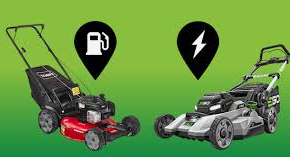
For generations, the Saturday morning ritual has been the same: wake up, check the weather, head to the shed, and pull the starter cord until your shoulder aches. But the landscape of lawn care is shifting rapidly. Walking down the aisle of a home improvement store today presents a confusing array of choices. You have the traditional gas-guzzlers, the quiet electric push mowers, and the autonomous droids that promise to do the work for you.
Choosing the right mower isn’t just about cutting grass; it is about how you want to spend your time and how much effort you are willing to invest in maintenance. Whether you are replacing a broken machine or just tired of the noise, this guide breaks down the pros and cons of the three main contenders to help you decide which is best for your patch of green.
1. The Old Guard: Gas Mowers
For decades, the gas mower was the undisputed king of the suburbs. They are powerful, familiar, and available everywhere.
The Pros:
- Raw Power: Gas engines provide high torque, making them capable of slashing through tall, wet, or neglected grass that might stall an electric motor.
- Runtime: As long as you have a jerry can of fuel, you can keep mowing. There is no waiting for batteries to charge.
- Durability: A well-maintained engine can last for decades.
The Cons:
- Maintenance Heavy: They require oil changes, spark plug replacements, air filter cleaning, and winterizing.
- Noise and Emissions: They are loud enough to require ear protection and contribute significantly to local air pollution.
- Physical Effort: Even self-propelled models require you to walk behind them, turning and maneuvering a heavy steel deck in the summer heat.
Verdict: Best for commercial landscapers or homeowners with massive, unruly properties where raw power is the only metric that matters.
2. The Modern Middle: Battery-Electric Push Mowers
As battery technology improved—driven largely by the electric car industry—cordless electric mowers became a viable alternative. They bridged the gap, offering a cleaner experience while keeping the traditional “walk-behind” form factor.
The Pros:
- Push-Button Start: No more pulling cords. They start instantly every time.
- Quieter Operation: While not silent, they are significantly quieter than gas engines.
- Lower Maintenance: There is no oil or gas to mix. Maintenance is mostly limited to sharpening the blade.
The Cons:
- Range Anxiety: If you have a large lawn, you might need multiple expensive batteries to finish the job in one go.
- Still Manual Labor: You are still pushing a machine for an hour or more. It solves the emissions problem, but it doesn’t solve the “lost time” problem.
Verdict: Best for small-to-medium yards where the homeowner enjoys the physical exercise of mowing but wants to avoid the hassle of gas engine maintenance.
3. The Future: Robot Mowers
The fastest-growing segment in lawn care is automation. This isn’t just a new way to cut grass; it is a fundamental shift in how we think about garden maintenance. Instead of a weekly chore, lawn care becomes a background service.
The Pros:
- Zero Effort: Once installed, the machine handles the mowing schedule autonomously.
- Lawn Health: Because they cut frequently (often daily), they mulch the clippings into tiny particles that fertilize the soil.
- Silence: They are quiet enough to run at night without disturbing neighbors.
The Cons:
- Setup: Initial installation (especially for wire-based models) takes time.
- Terrain Limits: Very steep slopes or incredibly rough terrain might require high-end, specialized models.
Verdict: Best for homeowners who value their time and want a consistently manicured lawn without the effort.
The Intelligence Factor: Where Robots Win
The biggest differentiator between these categories is intelligence. Gas and electric push mowers are “dumb” tools; they rely entirely on the operator to decide where to go and how short to cut.
In contrast, a modern smart lawn mower is a data-driven device. These machines use sophisticated algorithms to navigate complex gardens. They can handle narrow corridors, navigate around flower beds, and return to their charging station automatically when their battery is low. This “smart” aspect extends to weather awareness; many models will delay a scheduled mow if the forecast predicts heavy rain, protecting your turf from damage.
This intelligence also changes the aesthetic of the lawn. Because a robot lawn mower operates on a random or calculated pattern rather than fixed lines, it prevents the “tracking” look where wheels compress the soil in the same spots week after week. The result is a carpet-like finish that is difficult to achieve manually.
Cost Comparison: The Long Game
Sticker shock is common when people first look at automation. A good robotic unit often costs more upfront than a standard gas mower. However, the total cost of ownership tells a different story.
- Fuel vs. Electricity: Charging a robot costs pennies per month, whereas filling a gas can is increasingly expensive.
- Maintenance: A gas mower might require $50-$100 a year in tune-ups, oil, and filters. A robot largely just needs new blades, which are inexpensive.
- Time Value: This is the hidden metric. If you value your free time at even a modest hourly rate, the hours spent pushing a mower add up to thousands of dollars over the life of the machine.
Making the Switch
If you decide that automation is the right path, the next step is choosing the right unit for your specific environment. It is not a “one size fits all” scenario.
You need to consider the complexity of your layout. Do you have multiple zones separated by a driveway? Do you have many trees to navigate around? An advanced ai lawn mower uses sensors to “see” and adapt to these challenges, ensuring it doesn’t get stuck or miss patches of grass. This adaptability is crucial for intricate garden designs.
For simpler, open lawns, standard models are often sufficient. However, always check the slope rating and square footage capacity. When browsing a robot mower collection, it is generally wise to buy a model rated for a slightly larger area than you actually have. This ensures the machine isn’t running 24/7 to keep up, which extends its lifespan.
Conclusion
The gas mower had its day, and the electric push mower served as a necessary bridge. But for the modern homeowner, the robot mower offers a compelling proposition: a better-looking lawn with zero physical effort.
If you enjoy the smell of gasoline and the workout of pushing a machine, the traditional options remain. But if your goal is to enjoy your garden rather than work in it, the switch to a smart, automated system is the only logical choice. The technology has matured, the prices have stabilized, and the grass, quite literally, is greener on the other side.
Landing URL
Anchor & Landing URL
https://eu.anthbot.com
smart lawn mower
robot lawn mower