How Are Healthcare Enterprises Using Appinventiv to Create Apps That Improve ROI and Patient Engagement?

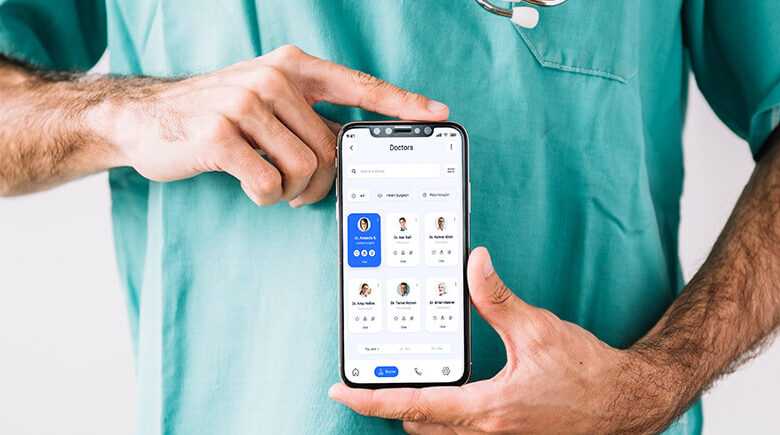
Not long ago, most healthcare organizations approached digital apps with a fairly simple mindset. Build the platform, make it accessible, and adoption will follow. Reality turned out to be more complicated. Plenty of well-funded apps launched successfully, yet months later, leadership teams were still asking the same questions. Are patients actually using this? Has the clinician’s workload improved? Are we seeing any measurable financial impact?
That shift in questioning has changed how enterprise healthcare apps are being built. Across the US, the Middle East, and global markets, the emphasis has moved away from novelty and toward operational fit. Leaders want fewer flashy pilots and more reliable platforms that quietly improve outcomes.
Where ROI-Focused Healthcare Apps Actually Begin
Organizations evaluating healthcare application development services usually don’t start with screens or features anymore. They start with operational friction. Patient drop-off during onboarding. Appointment no-show rates. Documentation bottlenecks. Limited data visibility for care coordination.
Once those issues are mapped clearly, the technology conversation becomes more grounded.
Something interesting happens at this stage: Integration complexity surfaces quickly, and a patient app might function perfectly on its own.
Connect it to scheduling workflows, EMR records, insurance systems, analytics dashboards, and the edge cases begin to appear. Authentication mismatches. Data latency. Reporting inconsistencies. Small issues individually. Significant collectively.
Some healthcare enterprises expand collaboration internationally once early deployments stabilize. Healthcare digital ecosystems are no longer geographically isolated. That reality influences architectural decisions earlier than before.
Patient Engagement Is No Longer Just a UX Concern
Executives increasingly view engagement through an operational lens. Higher engagement often correlates with better adherence, improved chronic care outcomes, and more predictable revenue streams.
Interestingly, engagement improvements often come from simplification. Removing unnecessary clicks. Clarifying instructions. Making scheduling easier. Those changes sometimes outperform sophisticated AI features. Patients rarely say they want “advanced technology.” They want clarity and reliability. Consistency builds trust.
Architecture Decisions Quietly Shape Financial Outcomes
Patients rarely see infrastructure design choices. Operations teams live with them daily. Typical enterprise healthcare app architecture now includes:
- FHIR interoperability frameworks for structured data exchange
- HL7 continuity for legacy environments
- Hybrid cloud governance models balancing compliance and scalability
- Secure patient identity and consent management systems
Organizations working with healthcare application development services providers often emphasize flexibility. Healthcare regulations evolve. Care delivery models shift. Infrastructure that adapts smoothly reduces future redevelopment costs. That adaptability influences ROI more than most feature decisions.
AI Integration Has Settled Into Practical Use
The AI conversation in healthcare has matured noticeably. Early enthusiasm created expectations of rapid transformation. Reality has been more gradual.
Common enterprise applications include:
- Documentation assistance that reduces the clinician’s administrative burden
- Predictive analytics supporting patient risk identification
- Administrative workflow automation
- Population health insights for care planning
These improvements rarely make headlines. Still, operational efficiency improves gradually. Over time, those gains compound. Healthcare tends to reward steady progress rather than dramatic disruption.
Security Remains Central to Adoption
Healthcare remains one of the most trust-sensitive industries. Security architecture directly affects patient willingness to engage digitally.
Enterprise healthcare apps increasingly incorporate:
- Continuous identity verification frameworks
- Encrypted data exchange protocols
- Transparent consent management systems
- Integrated threat monitoring capabilities
Organizations prioritizing security early typically experience smoother adoption later. Trust reduces hesitation.
Cross-Regional Healthcare Expansion Is Increasing
Healthcare organizations rarely operate within a single region now. Patient mobility, international partnerships, and telehealth expansion are driving global digital ecosystems.
Some enterprises collaborate with a mobile app development company in Dubai when expanding digital health initiatives into Middle Eastern markets. Local regulatory familiarity and regional infrastructure expertise can simplify rollout significantly. Healthcare innovation has become geographically fluid.
What Healthcare Leaders Tend to Emphasize
Across enterprise organizations, certain priorities surface consistently:
- Stable clinician workflows
- Reliable patient data continuity
- Compliance readiness
- Scalable analytics infrastructure
Technology investments increasingly intersect with operational strategy. Integration maturity often determines whether digital health initiatives deliver sustainable value. Execution discipline matters more than novelty.
Final Perspective
Healthcare digital transformation has entered a more pragmatic phase. The focus is shifting from launching applications quickly toward ensuring those applications integrate effectively, align with regulatory expectations, and deliver sustained operational value.
Organizations working with experienced healthcare application development services partners often find that ecosystem coherence determines long-term success. Interoperability maturity, governance discipline, and patient-centered design ultimately shape ROI.
Healthcare technology will continue evolving. Alignment with clinical realities and patient needs will remain essential.
Frequently Asked Questions
Why would a healthcare enterprise work with a mobile app development company in Dubai?
Some healthcare enterprises partner with a mobile app development company in Dubai when expanding digital health platforms internationally. These partnerships can help address regional regulatory alignment, localized patient engagement needs, and infrastructure scalability across Middle Eastern healthcare ecosystems.
How do healthcare application development services improve ROI?
Effective healthcare application development services focus on interoperability, workflow alignment, patient usability, and scalable architecture. These factors reduce operational friction, improve adoption rates, and support measurable financial and clinical outcomes.
What technologies are common in enterprise healthcare apps?
FHIR interoperability standards, HL7 messaging frameworks, hybrid cloud infrastructure, AI analytics platforms, and secure patient identity management systems are widely used.
How do healthcare apps maintain long-term engagement?
Consistency, usability, and relevance matter most. Apps that integrate naturally into care workflows tend to maintain engagement more effectively than feature-heavy platforms.