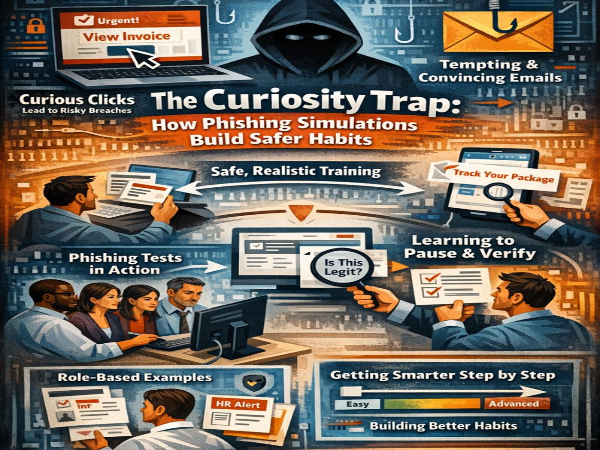
Curiosity drives many of the clicks that lead to cyber breaches, and you see this across organisations of every size. When an email looks unusual or urgent, staff often act before they think because the desire to know more, or take care of a problem quickly, overrides good judgement.
This behaviour creates a weak point that attackers exploit with simple but convincing messages. Stick around until the end to learn how phishing simulation testing helps you control this behaviour and build safer habits.
Why Curiosity Makes People Click
Curiosity pushes people to act quickly because a message that seems unexpected or interesting feels important. Staff see an invoice they didn’t expect, a message about a delivery or a request for personal details, and they respond before questioning the source. This moment of interest is exactly what attackers design their emails to trigger.
A realistic phishing simulation test shows how your team behaves when these emotions take over, and it highlights patterns you may not notice in day-to-day operations. When handled well, these exercises reveal how often staff take risks because they want quick answers, not because they lack technical understanding.
How Phishing Simulations Improve Judgement
Phishing simulations give staff a safe environment to practice without the pressure of real consequences. You’re not trying to catch people out, but help them build routines they can rely on every day. This approach focuses on developing stronger decision-making instead of simply pointing out mistakes.
When people see the types of emails they usually receive replicated in controlled scenarios, they connect the training to real activity. They start to slow down naturally and treat unexpected messages with more caution because their instincts shift from reacting quickly to verifying information first.
Designing Simulations That Reflect Real Roles
Effective simulations match the situations your staff face in their roles. Finance teams deal with invoices and payment details, so tailored examples help them recognise fraud attempts linked to their tasks. HR teams manage personal data and internal updates, so they need exercises that reflect those themes.
Clear relevance keeps staff engaged because the content mirrors their daily workload. When people see that the scenarios relate directly to what they do, they’re more likely to treat each simulation as a useful learning point, not just something to get through.
Building Confidence Through Gradual Difficulty
Simulations should rise in difficulty at the right pace so staff develop skill without feeling overwhelmed. You might begin with an obvious scammer email, and let people start easy. This will help them form good habits early. As their confidence grows, you can move to cleaner and more convincing messages that require closer attention.
This structure reinforces better verification habits, and it helps staff identify subtle warning signs that can be easy to ignore on a busy day. Each step strengthens their ability to pause before acting, which reduces risky clicks over time.
Turning Curiosity Into Safer Behaviour
The goal of a phishing simulation isn’t to remove curiosity, as it’s part of how people learn and respond to information. Instead, you want staff to recognise when curiosity is being used against them. Immediate feedback after a simulation supports this by explaining why the email was unsafe and what signs they may have missed.
Providing short reminders about checking sender details or inspecting links works well because staff can use these steps straight away. These practices help people turn a moment of interest into a safer and more deliberate action, which lowers the chance of a breach.
To Sum Up
Beating the curiosity effect requires constant reinforcement, so staff learn to pause, question and verify before taking action. Phishing simulation testing supports this by giving people repeated opportunities to practise safe behaviour, which reduces risky decisions over time.
By helping staff understand how curiosity influences their actions, you will create an environment where safer choices feel natural. With ongoing guidance and clear expectations, your organisation becomes far better prepared to prevent incidents caused by a single avoidable click.