Neville Hill Railway Depot: History, Operations, and Strategic Importance in Leeds Rail Network
A complete guide to one of the most important train maintenance depots in Northern England

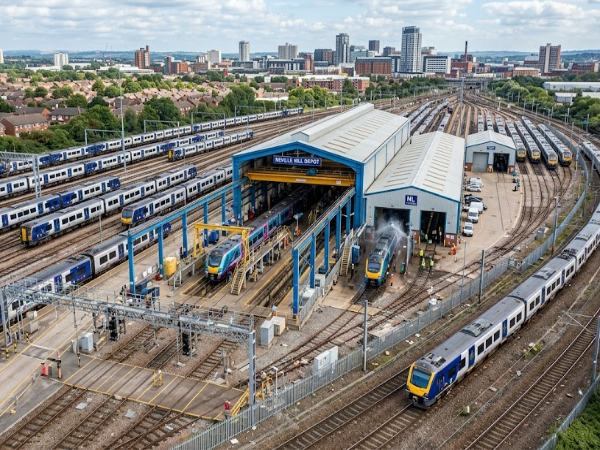
Neville Hill is a major railway train maintenance depot located in Osmondthorpe, Leeds, England, on the Leeds to Selby Line. It sits approximately 2 miles 14 chains east of Leeds railway station on the north side of the line and carries the TOPS depot code NL. Established in 1904, it serves as a key maintenance and servicing hub for passenger trains operating across Northern England, supporting both regional and long-distance rail services through inspections, repairs, cleaning, and stabling operations.
Table of Contents
ToggleIntroduction to Neville Hill Railway Depot
Neville Hill railway depot is one of the most significant rail maintenance facilities in Northern England, playing a central role in keeping passenger train services running efficiently across the region. Located in Osmondthorpe, a district of Leeds in West Yorkshire, the depot lies on the historically important Leeds to Selby Line. Its position close to Leeds railway station makes it strategically valuable for the servicing and turnaround of trains operating in and out of one of the busiest transport hubs in the UK.
The depot is not just a storage yard for trains; it is a fully equipped maintenance complex responsible for the inspection, repair, cleaning, and preparation of rolling stock. Over more than a century of operation, Neville Hill has evolved from a Victorian-era railway facility into a modern engineering hub supporting contemporary passenger services.
Historical Background of Neville Hill
The origins of Neville Hill date back to the early 20th century. It was established in 1904 by the North Eastern Railway to meet growing demands for railway maintenance in the Leeds area. At that time, the railway network was rapidly expanding, and existing facilities were no longer sufficient to manage the increasing number of locomotives and passenger coaches.
Before Neville Hill was built, maintenance operations in Leeds were largely handled at smaller depots such as Holbeck. However, these facilities quickly became overcrowded and inefficient as railway traffic increased. The creation of Neville Hill provided a modernized and larger-scale solution that allowed for better organization of maintenance work and improved turnaround times for trains.
Throughout the 20th century, the depot saw multiple expansions and upgrades. With the transition from steam locomotives to diesel and electric trains, Neville Hill adapted its infrastructure and equipment to meet changing technological requirements. Its continued modernization has ensured its relevance in the evolving British rail network.
Geographic Location and Strategic Importance
Neville Hill is located in Osmondthorpe, a suburban area of east Leeds. Its precise positioning on the Leeds to Selby Line places it approximately 2 miles 14 chains east of Leeds railway station, on the northern side of the tracks.
This location is strategically significant for several reasons. First, its proximity to Leeds allows for rapid access to incoming and outgoing passenger services. Trains can be quickly diverted to the depot for servicing without causing major disruption to scheduled operations. Second, its placement on a key regional line ensures connectivity with multiple routes across Northern England.
The depot’s accessibility makes it an essential part of daily railway operations, particularly for commuter and intercity services that require frequent maintenance checks and quick turnaround times.
Depot Code and Operational Classification
In railway operations, every maintenance facility is assigned a unique TOPS (Total Operations Processing System) code. Neville Hill’s depot code is NL. This code is used in operational planning, train scheduling, and logistics management across the UK rail network.
The classification of Neville Hill as a Traction Maintenance Depot (TMD) indicates its primary role in servicing and maintaining rolling stock rather than manufacturing or heavy engineering. It focuses on keeping trains operational, safe, and clean rather than building new railway equipment.
Role and Functions of Neville Hill Depot
Neville Hill serves a wide range of essential functions within the rail industry. These include:
Train Maintenance and Repairs
The depot is responsible for both routine and corrective maintenance of passenger trains. This includes mechanical inspections, brake testing, electrical system checks, and component replacements.
Cleaning and Preparation
Before trains enter service, they undergo thorough cleaning and preparation. This ensures passenger comfort and maintains service quality standards across the rail network.
Stabling of Rolling Stock
Trains not in active service are parked and secured within the depot facilities. This allows for efficient fleet management and ensures trains are ready for deployment when required.
Safety Inspections
Regular safety inspections are carried out to ensure compliance with national rail safety regulations. These inspections help prevent mechanical failures and operational risks.
Types of Trains Serviced at Neville Hill
Neville Hill depot services a wide variety of passenger rolling stock used across Northern England. This includes diesel multiple units (DMUs), electric multiple units (EMUs), and other modern passenger train formations.
The depot supports both local commuter services and longer-distance routes. Operators using Neville Hill facilities include major train operating companies that run services across Yorkshire, the North East, and other parts of the UK rail network.
The ability to service multiple train types makes the depot highly flexible and essential to maintaining a diverse fleet.
Maintenance Processes and Engineering Work
Maintenance operations at Neville Hill are structured and highly organized. Trains entering the depot typically follow a scheduled maintenance cycle based on mileage, usage, and condition.
Routine Servicing
Routine servicing includes basic inspections, fluid checks, safety testing, and minor repairs. These tasks ensure trains remain operational between major maintenance intervals.
Heavy Maintenance
More complex engineering work includes wheel replacement, engine servicing, electrical diagnostics, and structural inspections. These tasks require specialized equipment and trained engineering staff.
Fault Diagnosis
Modern diagnostic tools are used to identify technical issues quickly and accurately. This reduces downtime and ensures efficient repairs.
Modernization and Infrastructure Development
Over the years, Neville Hill has undergone significant modernization to keep pace with technological advancements in rail transport. The transition from steam to diesel and electric traction required major infrastructure upgrades, including the installation of new maintenance equipment and improved workshop facilities.
In recent decades, investment has focused on improving efficiency, safety, and environmental performance. Modern systems now allow for faster diagnostics, improved energy efficiency, and better working conditions for maintenance staff.
These upgrades have ensured that Neville Hill remains one of the most important maintenance depots in the northern rail network.
Economic and Operational Significance
Neville Hill plays a crucial role in the regional economy and transport infrastructure. By maintaining a large portion of the passenger train fleet serving Northern England, it directly contributes to the reliability of daily commuter services.
The depot supports hundreds of jobs, including engineers, technicians, and operational staff. It also indirectly supports the wider rail supply chain, including parts suppliers and engineering contractors.
From an operational perspective, Neville Hill helps reduce delays, improve service reliability, and ensure trains remain in safe working condition. Without such depots, large-scale passenger rail operations would not function efficiently.
Challenges Faced by the Depot
Despite its importance, Neville Hill faces several ongoing challenges. Increasing passenger demand places pressure on maintenance schedules, requiring faster turnaround times for trains.
Aging infrastructure also requires continuous investment to remain compatible with modern rolling stock. Additionally, the complexity of modern trains means that maintenance work requires highly skilled personnel and advanced diagnostic tools.
Balancing efficiency with safety remains one of the most important priorities for depot operations.
Future of Neville Hill Railway Depot
The future of Neville Hill is closely tied to the evolution of the UK rail network. As rail operators continue to introduce more advanced and environmentally friendly trains, the depot will need to adapt further.
Future developments are likely to focus on digital maintenance systems, automation in diagnostics, and improved sustainability practices. Electrification and hybrid train technology will also influence the type of work carried out at the depot.
Given its strategic location and historical importance, Neville Hill is expected to remain a key maintenance hub for many years to come.
Conclusion
Neville Hill railway depot is a cornerstone of railway maintenance operations in Northern England. Established in 1904 and located in Osmondthorpe, Leeds, it has evolved into a modern engineering facility supporting a wide range of passenger train services.
With its strategic location, advanced maintenance capabilities, and long operational history, the depot continues to play a vital role in ensuring the reliability and safety of rail transport across the region. As the railway industry continues to modernize, Neville Hill remains an essential part of the infrastructure that keeps the UK rail network moving efficiently.