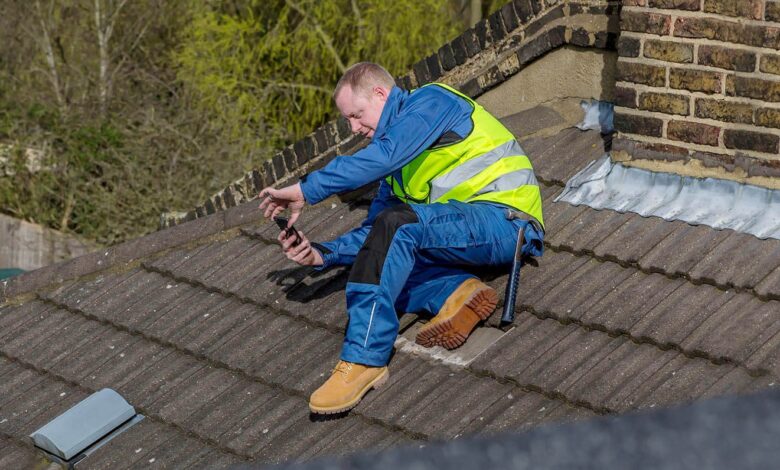
You’ve got a cracked tile on your roof. Just one. It’s been bothering you for weeks. You ring your roofer for a quick fix.
They give you a quote. It’s surprisingly expensive for a single tile. You ask why they can’t just pop up there and swap it out. They explain it’s not that simple. You get frustrated. You feel like you’re being ripped off.
But are you?
This is one of those situations where your roofer isn’t being difficult. They’re being honest about something most homeowners don’t understand. Replacing a single tile isn’t a five-minute job. And the reasons why reveal a lot about how roofs actually work.
The Real Cost of Getting a Roofer Up There
This is where the story starts with something most people miss: the cost isn’t really about the tile.
A single tile costs £3 to £15 depending on type and age. Sometimes less. Getting that tile onto your roof is the expensive part.
Your roofer needs to:
- Travel to your property (petrol, van wear and tear, time)
- Set up safety equipment (harnesses, fall arrest systems, ladders)
- Access the damaged tile safely (moving other tiles to reach it without breaking them)
- Remove the old tile carefully (the tiles around it might be 50 years old and fragile)
- Install the new tile
- Make sure flashing and pointing are still watertight
- Pack up equipment and leave
This job takes a minimum of 2 to 3 hours. Usually longer if the tile’s in an awkward location or the surrounding tiles are old and delicate.
A large roofing company like Point Roofing in Norwich charging £40 per hour (reasonable for skilled labour) plus £20 in materials and vehicle costs is looking at £140 to £160 minimum. Many will quote £180 to £250 for a single-tile replacement because it’s genuinely not economical to come out for anything less.
That seems expensive for a £5 tile. But you’re not paying for the tile. You’re paying for the labour, the safety considerations, and the fact that your roofer’s van and insurance are sitting in your driveway for three hours.
Why Roofers Push Back on Single Tiles
Here’s where it gets more complicated than just economics.
A roofer who’s been in the trade for twenty years has learned something: a single broken tile often indicates a larger problem. Not always. But frequently.
If a tile’s cracked, the question is why. Was it hit by wind? Then the tiles around it might be loose too. Are they going to fail next month? Was it thermal stress from rapid temperature change? Are other tiles on that roof experiencing the same stress? Did a tree branch hit it? Then there might be damage underneath—to the underlayment or the structure itself.
A roofer who replaces one tile without investigating why it broke might be fixing the symptom while missing the cause. Then they get called back two weeks later to replace three more tiles. The customer thinks they’re being ripped off repeatedly. The roofer knows they’re dealing with a broader issue that a single-tile replacement won’t solve.
This is why experienced roofers often recommend a roof inspection before any work. They’re not trying to sell you something you don’t need. They’re trying to understand what’s actually happening on your roof.
The Tile Matching Problem
Here’s something that catches people off guard: finding a matching tile might be impossible.
Your roof has tiles that were fitted thirty years ago. That particular model might no longer be manufactured. Or it’s made by a different company. Or it’s available, but in a slightly different shade because clay varies based on where it came from.
You replace one tile with a modern equivalent. Now you’ve got one visibly different tile on your roof. It stands out. It looks wrong. Some customers don’t care. Others find it genuinely frustrating.
A roofer will tell you this upfront because they know the disappointment of replacing a “matching” tile only to have the customer ring back saying it looks wrong.
Finding a genuine match sometimes means:
- Contacting the original tile manufacturer (if the roof’s over 20 years old, this might be difficult)
- Sourcing reclaimed tiles that match (more expensive, sometimes weeks of waiting)
- Accepting a slight colour variation
- Replacing a larger section of the roof to ensure consistency
None of these options are cheap or quick.
The Access Problem and Structural Risk
Some tiles aren’t easy to reach without moving surrounding tiles.
Roof tiles interlock. They’re mortared. They sit under ridge tiles. To replace a middle tile, you sometimes need to remove three or four surrounding tiles, work around flashing, and carefully reinstall everything so water doesn’t penetrate.
Move too many old tiles and you risk breaking them. A fifty-year-old tile is brittle. Move it carelessly and it shatters. Now you’re replacing five tiles instead of one.
Ridge tiles are especially problematic. If your crack is near the ridge, the roofer might need to disturb mortar and pointing that’s held for decades. This is delicate work. Do it wrong and you’ve created a leak that’s worse than the original crack.
A roofer who says “I’ll need to remove five tiles to safely access that one” isn’t being difficult. They’re being realistic about what it takes to avoid making things worse.
When Your Roofer Has a Point
Let’s be honest: some roofers are genuinely right to push back.
If your roof is 40+ years old: The entire roof is approaching end-of-life. Replacing a single tile on a forty-year-old roof is like putting a new door handle on a car that needs scrapping. You might get another two or three years of service. You might get a year. Replacing one tile doesn’t address the underlying fact that the roof is aging.
A responsible roofer will tell you: “This tile costs £150 to replace, but your whole roof is going to need replacing within five years anyway. You might want to budget for that instead of spending money on temporary fixes.”
If water damage is already evident: If you’ve got a cracked tile and water staining inside the house, the problem is bigger than the tile. Water’s been getting in. It soaked the underlayment. Maybe the timber. Maybe the insulation. A new tile won’t fix that damage. You need an investigation and potentially major work.
If the tile is part of a pattern of deterioration: Your roofer inspects the roof and finds this cracked tile is one of twenty that are failing. The pointing is gone. The underlayment’s compromised. Replacing one tile is pointless. The whole roof needs attention.
These are situations where a roofer saying “no, I won’t replace just one tile” is protecting you from wasting money on a temporary fix instead of addressing the real problem.
When Roofers Are Being Awkward
But sometimes roofers do push back unnecessarily.
You’ve identified a genuine, isolated damage: You saw a branch hit your roof in a storm. One tile cracked. Everything else looks fine. The underlayment appears intact. You just need the tile replaced.
A good roofer like Roofers Norwich will do this job without complaint. Yes, it costs £150 for a £5 tile. That’s the economics of small jobs. But if you want it done and you’re willing to pay, a professional roofer should do it.
The tile is accessible without moving others: Some tiles can be reached from the edge of the roof without disturbing surrounding tiles. If your cracked tile is in one of these accessible positions, removal and replacement is genuinely straightforward. A roofer who quotes three hours for a ten-minute job is padding the work.
You’re a regular customer with goodwill: If you’ve had this roofer maintain your property for years, they might include a single-tile replacement as part of their service. Not because it’s economical. Because you’re a good customer and they value the relationship.
A roofer who refuses everything, even jobs they could do quickly, isn’t being professional. They’re being protective of their labour time in a way that frustrates customers.
The Data on Roof Failures After Single-Tile Replacement
Here’s something worth knowing: roofers’ reluctance often comes from experience.
A study of roof maintenance by the National Association of Home Builders found that single-tile replacements on roofs over thirty years old were followed by additional failures within twelve months in roughly 40% of cases. Not because the new tile was poor quality. Because the underlying roof was aging, and the single-tile incident was a symptom, not an isolated event.
A roofer who’s replaced hundreds of tiles over twenty years has seen this pattern. They know that the customer who calls for one tile replacement might call back three months later for five more. It’s not that they’re trying to make more work. They’re working from empirical knowledge.
What You Should Actually Do
Before you agree to any single-tile replacement, ask your roofer these questions:
Is this an isolated incident or a symptom of broader problems? Let them inspect the roof. Get their honest assessment. If it’s isolated, great. If it’s not, know what you’re dealing with.
What’s the expected lifespan of my roof? If your roof is thirty years old and the typical lifespan for your tile type is forty years, replacing one tile now might be pointless. You’re better off budgeting for replacement in five to ten years.
Will the replacement tile match visually? If colour matching is a concern, discuss this before work begins. Understand what your options are.
What’s involved in accessing this tile safely? Let them explain the work realistically. If they need to move five tiles to safely reach one, that’s legitimate. If they’re exaggerating access difficulty to inflate the job, that’s not.
Can you do it in one visit or will follow-up work be needed? Some jobs reveal problems once the roofer gets up there. Understand whether this might happen and what the cost implications are.
When to Accept the Cost and When to Negotiate
Single-tile replacement costs £150 to £250. That’s frustrating for a £5 tile. But it’s not unreasonable for skilled labour, safety compliance, and professional work.
However:
- If you’re quoted £400 for a single tile replacement on a straightforward roof, get a second opinion
- If your roofer refuses to explain why the job costs what it does, that’s a red flag
- If they’re reluctant to do the work at all but will “reluctantly” for a premium price, they’re not interested in your business properly
- If they recommend replacement without inspecting the roof first, they’re not being thorough enough
A good roofer will quote a fair price, explain what’s involved, and be honest about whether the work makes sense. They might recommend against it. But if you insist, they’ll do it professionally without making you feel like you’re bothering them.
The Reality of Roof Maintenance
Here’s what your roofer is really trying to tell you: roof maintenance isn’t about individual tiles. It’s about managing the whole roof system.
A single cracked tile might not matter. It might be the first sign of a roof reaching the end of its life. It might indicate a structural issue. Getting a professional assessment before proceeding is just sensible.
And yes, replacing one tile is expensive relative to the tile itself. But you’re not paying for the tile. You’re paying for professional access, safety, expertise, and the time commitment that any job requires.
The question isn’t whether a single-tile replacement is economically efficient. It’s whether it makes sense for your specific roof in your specific situation. Let your roofer help you answer that honestly, rather than assuming they’re just trying to sell you more work than you need.