Why Self-Service Technology Is Becoming Essential for Modern Customer Experiences

Introduction
Customer expectations are increasingly shaped by digital experiences that prioritise speed, convenience, and control. From online shopping and mobile banking to travel bookings and food ordering, people have become accustomed to completing everyday tasks independently and with minimal friction. These expectations now extend into physical environments, where customers increasingly value digital options alongside traditional personal service. Working with an experienced self-service kiosk manufacturer can help organisations introduce intuitive technology that supports customer independence while improving service-delivery efficiency. When thoughtfully integrated into the wider customer journey, self-service technology can create faster interactions, improve access to information, and give customers greater flexibility over how they engage with an organisation.
Why Customer Expectations Are Changing
Digital technology has transformed the way people interact with businesses. Customers can now research products, manage accounts, book services, place orders, and make payments from their own devices, often without needing direct assistance. As these experiences become part of everyday life, customers naturally begin to expect similar convenience when visiting physical locations. Organisations that rely entirely on traditional service models may find it more difficult to meet these changing expectations, particularly during busy periods. Self-service technology provides an additional interaction channel that allows customers to complete suitable tasks independently while maintaining access to employees whenever personal support is needed.
Giving Customers Greater Choice
A strong customer experience does not require every person to follow the same journey. Some customers prefer direct assistance from employees, while others value the speed and independence of self-service. Offering both options gives people more freedom to choose how they interact with an organisation based on their preferences and circumstances. Someone completing a familiar routine task may prefer a digital journey, while another customer dealing with a more complicated requirement may want personal assistance. Self-service technology lets businesses accommodate these different behaviours in the same environment, creating a more flexible service approach without removing the human interactions customers may still value.
Creating Faster Everyday Interactions
Speed can significantly affect customer satisfaction, especially when the task is relatively straightforward. Customers may become frustrated if they need to wait in a queue simply to access basic information, register their arrival, place a simple order, or complete another routine interaction. Self-service technology can provide an alternative route that lets customers complete suitable tasks independently. This can reduce unnecessary delays while helping organisations distribute customer demand more effectively. Faster interactions can make the overall experience feel more convenient and allow customers to continue their journey without avoidable interruptions.
Reducing Friction in the Customer Journey
Customer journeys often include small points of friction that seem minor individually but collectively affect the overall experience. Confusing processes, unclear instructions, repeated information requests, and unnecessary waiting can all make an interaction feel more complicated than it needs to be. Well-designed self-service experiences can simplify these moments by presenting customers with clear information and logical next steps. Rather than adding technology as another layer, organisations can use digital interfaces to remove unnecessary complexity. The objective should always be to make the customer journey easier to understand and complete.
Improving Access to Useful Information
Customers frequently need information before deciding what to do next. Depending on the environment, they may want to explore products, compare services, check availability, understand different options, find directions, or review relevant details. Employees can provide this information, but they may not always be immediately available when customer demand is high. Self-service systems provide another way for customers to access relevant content directly. Digital interfaces can present detailed information in an organised and interactive format, allowing users to explore what is most relevant to their needs. This can improve customer confidence while reducing dependence on employees for routine information requests.
Supporting More Efficient Customer Flow
Managing customer flow is important across retail stores, hospitality venues, healthcare facilities, leisure environments, transport locations, and other customer-facing spaces. When every interaction must happen at the same staffed service point, queues can build quickly during periods of increased demand. Self-service technology creates additional touchpoints that can distribute interactions more effectively throughout the environment. Customers completing routine tasks independently can move through the journey without joining traditional queues, while employees remain available for more complex requirements. Better distribution of interactions can create smoother customer movement and help organisations maintain service quality during busy periods.
Helping Employees Focus on Higher-Value Service
Employees remain essential to many customer experiences, particularly when people need advice, reassurance, problem-solving, or personalised recommendations. However, staff may also spend considerable time handling repetitive activities that do not necessarily require direct human involvement. Self-service technology can handle routine interactions, allowing employees to focus on situations where their skills and knowledge add more value. This approach does not replace personal service. Instead, it can help organisations use employees more effectively while providing customers with convenient alternatives for straightforward tasks.
Supporting Operational Efficiency
Customer experience and operational efficiency are closely connected. An organisation may deliver excellent personal service, but if processes are unnecessarily slow or employees are overwhelmed by repetitive tasks, maintaining that standard can become difficult. Self-service technology can support more efficient workflows by giving customers additional ways to complete appropriate interactions. This can increase service capacity without requiring every customer journey to depend entirely on a staffed touchpoint. When integrated effectively with wider operations, self-service can help organisations manage resources more efficiently while maintaining a strong focus on customer satisfaction.
Creating Consistency Across Locations
Organisations operating across multiple locations need to maintain a recognisable and consistent customer experience. If processes differ significantly between sites, customers may need to relearn how to access services each time they visit a new location. Digital self-service systems can help standardise certain interactions by providing consistent interfaces, navigation, terminology, and information across different sites. Customers who become familiar with the experience in one location can more easily understand it elsewhere. This consistency can also simplify introducing new services because organisations have a digital platform through which they can deliver updated functionality or information across multiple environments.
Connecting Digital and Physical Experiences
Customers increasingly move between digital and physical channels as part of a single journey. They may begin by researching a business online, continue the interaction through a mobile device, and later visit a physical location. Self-service technology can help connect these environments by bringing digital functionality into the physical customer experience. Familiar design principles and consistent information can make the transition between channels feel more natural. This approach can support organisations developing omnichannel strategies by creating stronger connections between websites, mobile experiences, physical spaces, and other customer touchpoints.
Reinforcing Brand Identity
Digital self-service systems represent the organisation just as much as websites, physical environments, advertising, and employees. The interface should therefore reflect the wider brand through its visual design, tone of voice, imagery, navigation, and overall experience. A generic or confusing system can feel disconnected from the rest of the customer journey, while thoughtful design can reinforce brand recognition and professionalism. Maintaining consistency across physical and digital touchpoints creates a more cohesive experience and ensures technology feels integrated into the organisation rather than added as an unrelated feature.
Making Self-Service Intuitive
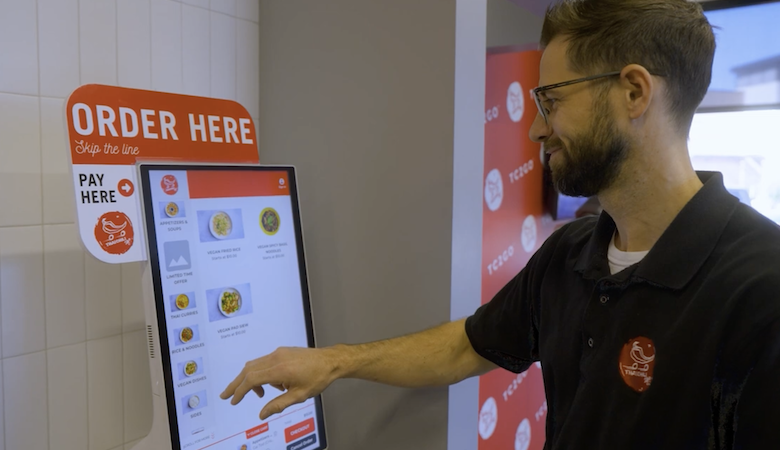
Customers are unlikely to view self-service as convenient if the technology itself is difficult to understand. Usability is therefore fundamental to successful implementation. Interfaces should guide customers naturally through the interaction with clear navigation, readable information, logical choices, and straightforward instructions. Organisations also need to consider how the kiosk fits within the physical environment, including its placement and how customers approach and leave the interaction. Designing around real user behaviour helps ensure that technology genuinely simplifies the customer journey rather than creating new points of frustration.
Supporting Accessibility
Customer-facing technology needs to consider the diverse requirements of the people expected to use it. Accessibility involves more than the digital interface alone and may include physical placement, readability, navigation, clarity of language, and alternative methods of accessing assistance. Organisations should also recognise that some customers may not want or be able to use self-service technology. Providing access to human support alongside digital options helps create a more inclusive service model. The purpose of self-service should be to expand customer choice and convenience rather than limit how people can interact with an organisation.
Adapting to Different Customer Environments
Self-service technology can support many industries, but the customer journey should be designed around the specific environment in which it will operate. Retailers may focus on product discovery, ordering, or customer services, while hospitality businesses may prioritise check-in or ordering experiences. Healthcare environments may use digital systems for suitable administrative processes, while leisure and transport organisations can provide ticketing, information, or visitor services. Corporate environments may have different requirements again. Understanding the purpose of the interaction helps organisations develop self-service experiences that solve real customer and operational challenges.
Preparing for Future Digital Services
Customer expectations will continue to evolve as new technologies and service models become familiar. Organisations therefore benefit from digital experiences that can adapt, rather than remain fixed to today’s requirements. Flexible self-service systems can make it easier to introduce updated information, new services, revised customer journeys, or additional functionality over time. This can allow businesses to respond to changing expectations without continually redesigning the entire physical environment. Scalable digital technology can therefore support long-term customer experience strategies and immediate service improvements.
Frequently Asked Questions (FAQs)
Why is self-service technology becoming important for customer experience?
It gives customers greater control over suitable interactions while providing faster access to information and services and reducing unnecessary friction throughout the journey.
Does self-service technology replace personal customer service?
No. Self-service can complement personal service by handling suitable routine interactions while employees focus on customers who need advice, support, or more complex assistance.
Can self-service systems improve operational efficiency?
Yes. They can distribute routine interactions across additional service points, support better staff utilisation, and help organisations manage customer demand more effectively.
Which industries can benefit from self-service technology?
Retail, hospitality, healthcare, leisure, transport, corporate environments, and many other customer-facing sectors can use appropriately designed self-service experiences.
What makes a good self-service customer experience?
An effective experience should be intuitive, accessible, relevant to the customer’s needs, consistent with the wider brand, and integrated naturally into the overall customer journey.
Conclusion
Self-service technology is becoming an important part of modern customer experience because it responds directly to growing expectations for convenience, speed, flexibility, and control. By giving customers more ways to access information and complete routine interactions, organisations can reduce unnecessary friction and create more efficient customer journeys. At the same time, employees can focus more attention on situations where personal knowledge and human support make the greatest difference.
Successful self-service is not simply about introducing more technology into physical environments. It requires careful consideration of usability, accessibility, customer behaviour, branding, operational requirements, and the relationship between digital and human service. Organisations that approach self-service as part of a broader customer experience strategy can create more connected interactions while building the flexibility needed to meet future expectations.