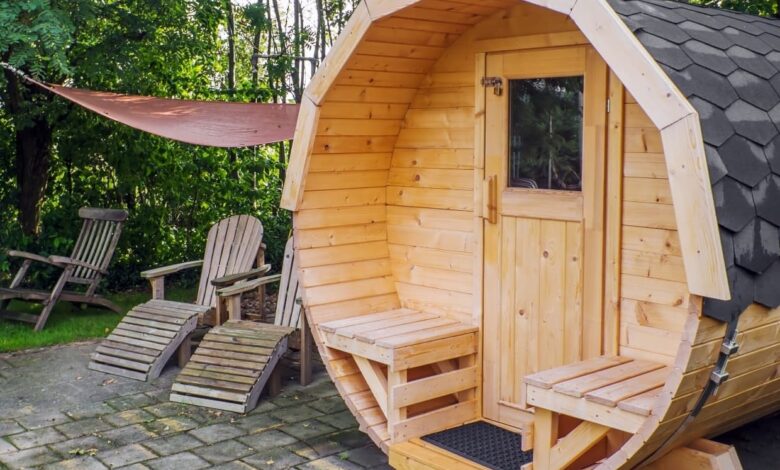
Adding a sauna to your garden seems like a nice idea until you begin to investigate what it actually entails. The truth is that, to be successful, the installations need to be well thought out in terms of legal, practical, financial, and operational aspects. Starting without knowing these factors will only result in costly errors and unmet expectations.
Fortunately, none of these things is particularly difficult once you get to know the points to be considered. Homeowners who plan the criteria carefully are always happy and satisfied with the saunas they have. On the contrary, the latter are often annoyed with the sudden increase in costs, lack of proper documents, or installation that is not quite suitable for their real needs.
Planning Permission and Building Regulations
Local planning requirements differ significantly from one place to another, and people often find out the hard way that the assumptions about what can be built without permission are wrong. For example, some local authorities consider garden saunas as outbuildings, which fall under the category of permitted development rights, but others require a planning application in full. Whether or not the sauna qualifies for any of these depends on its size, height, proximity to the boundaries, and the total estate coverage, among other factors.
Building regulations are a different matter altogether from planning permission, but most folks tend to mix up the two. Even if your sauna is not subject to planning permission, it may still have to meet building regulations requirements concerning soundness, fire safety, and electrical installations. Non-compliance could result in the dismantling of the finished sauna or enforcement proceedings.
If your home is in a conservation area, is a listed building, or has a restrictive covenant on it, you will be tightly regulated or even banned from installing a sauna. So if your property is in an area that is protected or has historical designations, check these restrictions before you decide which sauna to buy. Finding out after the fact that there are restrictions is very annoying and leaves few ways out of the situation.
Space Requirements and Garden Layout
Garden saunas require more space than just their physical dimensions. For one, you will need access space for maintenance around the structure, enough distance from the boundaries to comply with regulations and avoid neighbors’ complaints, and space for the entire experience, including the paths and areas for cooling down. A sauna shoved into the smallest likely spot causes practical problems and lessens the pleasure.
Think about how different usage scenarios will be depending on the weather and seasons. It makes a huge difference how the route between your house and the sauna is when you are tired of constantly going through mud or snow to get to your wellness space. Also, think of whether you want covered walkways, proper lighting for nighttime use, or adjacent seating areas for cooling down between sessions.
The garden’s contours have an impact both on the installation costs and the long-term performance. For a sloping plot, more foundation works are required to create level bases, whereas the problem of drainage is created by low, lying areas susceptible to water pooling. A lack of good drainage is the main cause of moisture problems that not only weaken the structure but also make its life span significantly shorter.
Budgeting Beyond the Purchase Price
The sticker price for outdoor saunas represents just one component of total ownership costs. Foundation work, electrical installation, delivery and assembly, permits and inspections, these additional expenses often add 30-50% to the base unit cost. Homeowners who budget only for the sauna itself face unpleasant surprises when the real bills arrive.
The electrical supply requirements may be one of the biggest cost factors, depending on how your current electrical infrastructure is set up and where you plan to put the sauna. For example, if you want to run a new dedicated circuit from your electrical panel to a faraway garden corner for your sauna, it will require trenching for the conduit, proper, gauge wiring and the installation has to be done by a professional. Besides, if there is no room in your panel for the extra load, the upgrade costs escalate the price substantially.
The running costs should also be taken into account. An electric sauna, when turned on for heat, use quite a lot of electricity. Therefore, having regular sessions can be a noticeable addition to your power bill. On the other hand, wood, fired sauna avoids electricity charges, but they still have to buy wood, burn more, clean and maintain more frequently. Being aware of the continual expenses can help you decide on the most cost-effective option based on your usage pattern.
Heating System Choices and Their Implications
Electric heating is really convenient and provides steady heat with hardly any maintenance. You just set the temperature, wait a bit, and get to enjoy the heat without any fluctuations. On the flip side, electric heating systems need a special power circuit, increase your energy bills, and are at the mercy of the grid which can fail during outages.
Wood-burning stoves offer a traditional sauna experience that many enthusiasts fancy. They get the aromatic wood smoke and the whole ritual of fire, tending as part of the practice. Besides, these systems dont have any electrical needs and they can keep running even during power outages. However, the downside is that the wood stoves require more work, burning wood is always a cost, the heating-up process takes longer and there are local regulations that may limit or prohibit the use of wood.
Some manufacturers provide a third alternative, infrared heating, which operates at a lower temperature though it is claimed to have similar benefits but through different mechanisms. These heating systems warm your body directly, rather than the air, thus giving a completely different experience which some people prefer while others find it rather unsatisfactory compared to the traditional sauna. They consume less energy but cannot provide the high, heat environment that the sauna purists are after.
Making the Right Decision for Your Situation
One should carefully consider if they want a garden sauna however, there is no need to be frightened by such a thought that you will do nothing about it. In fact, those who thoroughly understand the projects they will engage in are usually making better decisions in terms of whether they should move on or not, what kind of sauna will fit their needs, and how to bring their ideas into reality successfully.
Firstly, you should think carefully whether you will be able to use a garden sauna often enough for the investment to make sense. The reality of the situation will be quite different from your initial desire for daily sessions after the first excitement has worn off. Take into account your present health regime, your willingness to go outside when the weather is bad, and the time you have at your disposal. A garden sauna is a source of great value and pleasure if you really and truly use it on a regular basis. However, if you are hoping for it to be the remedy for those habits you lack then it will most probably be a costly garden decoration. The secret lies in your choosing the type of sauna which corresponds perfectly to your real life rather than the kind of life you picture yourself to be but which you will never be able to achieve.