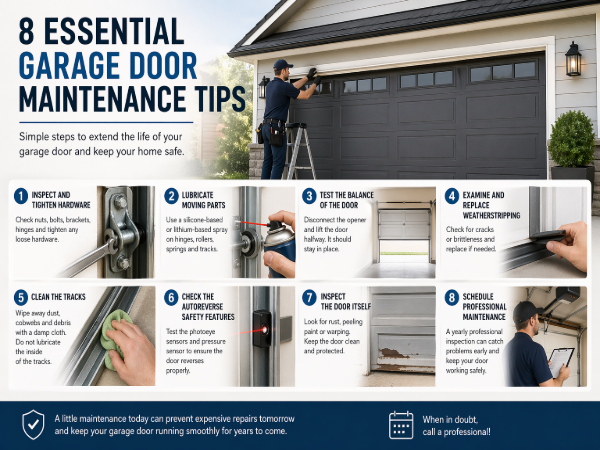
In any home, the garage door is one of the hardest-working moving systems there is. However, it is also one of the most overlooked. Many people only pay attention to their garage door when something goes wrong. This might be that it jams halfway, makes worrying grinding sounds or simply refuses to open on a cold morning. A little pre-emptive maintenance can go a long way. When you take a proactive approach, you can extend the lifespan of your garage door, avoid costly garage door repairs and also keep your home functional and secure.
1. Inspect and tighten hardware
You might open your garage door multiple times a day. The constant vibrations of this movement loosen nuts, bolts and brackets. It is a good idea to carry out regular inspections, which can help prevent rattling, misalignment and also premature wear. You should pay special attention to the roller brackets, track supports, and hinges. If you find any loose hardware, then it can be a good idea to tighten it up. This will keep the doors stable and also reduce strain on your opener.
2. Lubricate moving parts
One of the simplest, easiest, and most effective maintenance tasks you can undertake is lubrication. Using a silicone-based or lithium-based spray on the hinges (WD-40), rollers, springs and tracks will allow your garage door to glide smoothly. Correct lubrication will help reduce friction, prevent rust and also reduce noise. It is important to avoid using a heavy grease-based product, which will attract dirt and cause build-up over time.
3. Test the balance of the door
If your garage door is out of balance, then this will force the opener to work much harder and can eventually lead to motor burnout. Disconnect your opener and manually lift your garage door halfway. If the door does not stay in place, then it may be that the springs need adjustment. You mustn’t adjust the springs yourself; they are under high tension, so this is a task that is best left to a professional. However, testing the balance yourself is a good preventative step.
4. Examine and replace weatherstripping
The weatherstripping along the bottom and sides of the door is designed to keep out drafts, pests and moisture. Over time, it can crack or become brittle. Replacing worn weatherstripping is an inexpensive task and can help maintain energy efficiency. It can also help to protect the interior of your garage from water damage, particularly during periods of heavy rain.
5. Clean the tracks
Dust, cobwebs and debris can accumulate in the tracks, which causes the rollers to stick or grind. Wiping the tracks with a damp cloth and a mild cleaner, before drying them thoroughly, can help to avoid this. Don’t add lubricant inside the tracks. Your rollers need to run clean and not be slippery.
6. Check the autoreverse safety features
Modern garage doors have safety mechanisms that are designed to prevent accidents. Test the photoeye sensors by placing an object in the path of the door; the door should reverse immediately. You should also test the pressure sensor by gently resisting the door as it closes. If either of these features fails, then it is important to address the issue promptly to keep your household safe. This means calling in a company that specialises in garage doors to take a look at the issue.
7. Inspect the door itself
No matter what your door is made of, the surface may require attention. Look for rust spots, peeling paint or warping. Wooden doors usually require sealing, and metal doors benefit from rustproofing. Keeping the door clean and protected can prevent structural deterioration.
8. Schedule professional maintenance
Even with the most diligent DIY maintenance, a yearly professional inspection can be invaluable. A qualified technician can spot any early signs of wear, adjust spring tension and ensure your opener is calibrated correctly.