Person Specification: The Complete Guide to Defining the Ideal Candidate
Person Specification Explained: How Employers Identify the Right Talent

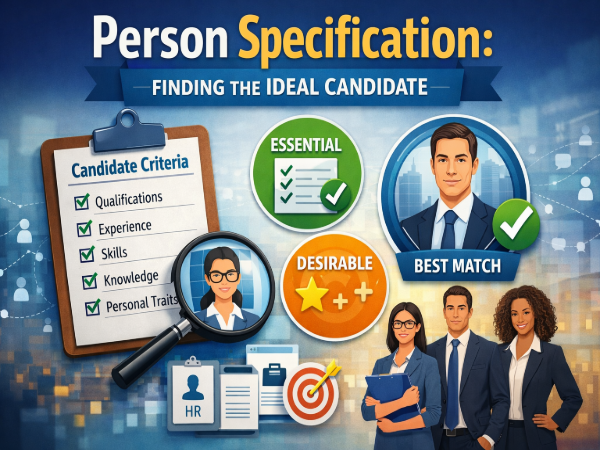
A person specification is a detailed profile outlining the skills, qualifications, experience, knowledge, and personal attributes required for a specific role. Derived directly from the job description, it sets clear and measurable criteria used to shortlist and select candidates fairly and effectively. By defining what is essential and desirable, a person specification helps employers make objective recruitment decisions and enables applicants to assess their suitability for the role.
Introduction to Person Specification
In today’s competitive recruitment landscape, hiring the right person is more important than ever. Organizations are no longer just filling vacancies; they are building teams that drive growth, innovation, and long-term success. This is where a person specification becomes a critical recruitment tool.
A person specification clearly defines the type of individual required to perform a role effectively. While the job description focuses on duties and responsibilities, the person specification focuses on the person — their abilities, experience, and personal qualities. When written correctly, it ensures fairness, transparency, and consistency throughout the recruitment process.
What Is a Person Specification?
A person specification is a structured document that outlines the attributes a candidate must have to be successful in a specific role. It is developed from the job description and translates job duties into measurable human qualities.
It answers questions such as:
-
What skills are required to perform the job?
-
What experience is necessary?
-
What qualifications are essential or desirable?
-
What personal traits will help someone succeed in the role?
By clearly defining these criteria, employers can evaluate candidates objectively rather than relying on assumptions or subjective impressions.
Person Specification vs Job Description
Although closely linked, a person specification and a job description serve different purposes.
Job Description
-
Describes what the job involves
-
Lists duties, responsibilities, and reporting lines
-
Explains where the role fits within the organization
Person Specification
-
Describes who is suitable for the job
-
Lists skills, experience, qualifications, and attributes
-
Defines selection and shortlisting criteria
Together, they form the foundation of a fair and effective recruitment process.
Why a Person Specification Is Important
A well-written person specification benefits both employers and candidates.
Benefits for Employers
-
Ensures fair and consistent candidate evaluation
-
Reduces unconscious bias in recruitment
-
Improves the quality of shortlisted candidates
-
Provides a clear framework for interviews
-
Supports legal and ethical hiring practices
Benefits for Candidates
-
Clarifies employer expectations
-
Helps applicants assess their suitability
-
Guides CV and application writing
-
Promotes transparency in hiring decisions
Without a clear person specification, recruitment decisions can become inconsistent, subjective, and legally risky.
Core Components of a Person Specification
Most person specifications follow a structured format. The criteria are usually divided into essential and desirable requirements.
Essential Criteria
Essential criteria are the minimum requirements a candidate must meet to be considered for the role. If an applicant does not meet these, they are typically not shortlisted.
Qualifications
These include formal education and professional certifications required for the role.
Examples:
-
Degree in a relevant subject
-
Professional licenses or certifications
-
Mandatory training or accreditation
Experience
This section outlines the level and type of experience required.
Examples:
-
Number of years in a relevant role
-
Industry-specific experience
-
Experience working in similar environments
Skills and Competencies
Skills refer to what a candidate can do, both technically and behaviorally.
Examples:
-
Communication and interpersonal skills
-
Problem-solving ability
-
Technical or IT skills
-
Time management and organization
Knowledge
This includes subject-specific understanding or awareness required to perform the role effectively.
Examples:
-
Knowledge of industry regulations
-
Understanding of organizational policies
-
Familiarity with specific systems or processes
Desirable Criteria
Desirable criteria are qualities that enhance a candidate’s suitability but are not mandatory. Meeting these can give candidates a competitive advantage.
Examples:
-
Additional qualifications
-
Experience in a similar organization
-
Leadership or mentoring experience
-
Knowledge of specialized tools or methods
Desirable criteria allow flexibility and encourage a broader range of applicants.
Personal Qualities and Attributes
Personal attributes define how a candidate approaches their work and interacts with others. These qualities are often critical to team dynamics and organizational culture.
Common attributes include:
-
Reliability and integrity
-
Adaptability and resilience
-
Motivation and initiative
-
Teamwork and collaboration
-
Professionalism and accountability
These traits are often assessed through interviews, references, and behavioral questions.
How a Person Specification Supports Fair Recruitment
One of the most important roles of a person specification is promoting fairness and equality. By setting criteria in advance, all candidates are assessed against the same standards.
This approach:
-
Reduces personal bias
-
Encourages objective scoring
-
Supports equal opportunity principles
-
Helps defend recruitment decisions if challenged
A clear person specification ensures that hiring decisions are based on evidence rather than assumptions.
Using a Person Specification for Shortlisting
During shortlisting, recruiters compare applications directly against the person specification. Each essential criterion is checked, and candidates who meet them progress to the next stage.
Many organizations use scoring systems, where:
-
Essential criteria must be met
-
Desirable criteria add extra points
This structured process ensures consistency and transparency throughout recruitment.
Using a Person Specification in Interviews
A person specification is not just useful at the application stage — it also guides interviews.
Interview questions are often designed to test:
-
Skills listed in the specification
-
Experience related to essential criteria
-
Behaviors linked to personal attributes
This ensures interviews remain focused, relevant, and job-related.
Writing an Effective Person Specification
A strong person specification should be:
Clear
Avoid vague or subjective language. Each criterion should be specific and measurable.
Relevant
Only include requirements that are genuinely necessary for the role.
Realistic
Avoid overloading the specification with excessive criteria that discourage applicants.
Inclusive
Use neutral language that encourages diversity and equal opportunity.
Common Mistakes to Avoid
Even experienced recruiters can make mistakes when writing person specifications.
Being Too Vague
Phrases like “good communication skills” should be clarified with context or examples.
Overusing Desirable Criteria
Too many desirable requirements can unintentionally exclude strong candidates.
Including Unnecessary Requirements
Every criterion should directly relate to the role’s responsibilities.
Using Biased Language
Avoid terms that could discourage certain groups from applying.
Person Specification and Legal Compliance
A person specification plays an important role in meeting employment law and equality standards. Criteria must be:
-
Job-related
-
Justifiable
-
Non-discriminatory
Well-documented specifications help organizations demonstrate fairness and defend hiring decisions if legally challenged.
How Candidates Should Use a Person Specification
For job seekers, the person specification is a roadmap for success.
Candidates should:
-
Match their CV to essential criteria
-
Use examples to demonstrate skills and experience
-
Address the specification directly in applications
-
Prepare interview answers based on listed attributes
Understanding the person specification significantly improves application success rates.
Adapting Person Specifications for Modern Recruitment
As workplaces evolve, person specifications are also changing. Many organizations now emphasize:
-
Transferable skills
-
Learning ability and adaptability
-
Emotional intelligence
-
Cultural alignment
This reflects the growing importance of potential alongside experience.
The Role of Person Specification in Talent Management
Beyond recruitment, person specifications support:
-
Performance management
-
Training and development
-
Career progression planning
They provide a benchmark for evaluating employee growth and identifying skill gaps.
Conclusion
A person specification is one of the most powerful tools in recruitment. By clearly defining the skills, experience, and attributes required for a role, it ensures fairness, clarity, and effectiveness throughout the hiring process. Derived from the job description, it provides objective criteria for shortlisting and selection, benefiting both employers and candidates alike.
When written thoughtfully and used consistently, a person specification not only improves hiring outcomes but also strengthens organizational culture, compliance, and long-term success. In an increasingly competitive job market, it remains an essential foundation for smart, strategic recruitment.