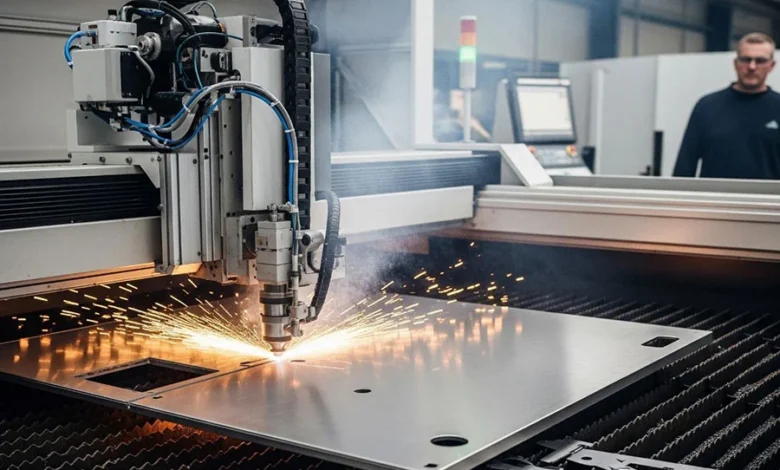
The advent of the fiber optic laser cutting machine has significantly transformed the manufacturing landscape. This advanced technology offers unprecedented precision, efficiency, and flexibility, enabling industries to achieve higher productivity levels. Companies worldwide are integrating these machines into their production lines to enhance output and reduce operational costs.
Understanding Fiber Optic Laser Cutting
Fiber optic laser cutting machines use a laser beam generated by a laser source, which is transmitted and focused onto a material’s surface using a fiber optic cable. This highly concentrated energy melts, burns, or vaporises the material, resulting in a precise cut. Unlike traditional laser cutting methods, fiber optic technology allows for sharper and more detailed cuts, especially on metals and other dense materials.
Advantages over Conventional Techniques
Compared to conventional cutting techniques, fiber optic laser cutting offers several benefits. Firstly, it provides superior precision and cuts quality, which reduces the need for additional processing or finishing. Secondly, these machines operate at higher speeds, allowing for increased throughput. Thirdly, they have lower maintenance and operational costs due to fewer moving parts and improved energy efficiency.
Applications in Various Industries
The fiber optic laser cutting machine is suitable for a wide range of materials, including metals, plastics, and composites. Its versatility makes it ideal for industries ranging from automotive and aerospace to electronics and construction. For instance, in the automotive industry, these machines are used for cutting intricate parts with high precision, contributing to the production of safer and more efficient vehicles.
Impact on Manufacturing Processes
Implementing fiber optic laser cutting machines within manufacturing processes leads to a more streamlined production line. The technology minimises downtime and increases the accuracy of each cut, reducing material waste. Furthermore, modern machines are equipped with advanced software tools that allow for seamless integration with computer-aided design (CAD) systems, thereby facilitating a more automated and cost-effective production process.
Laser Cutting and Material Efficiency
Material efficiency is a significant consideration for manufacturers, and fiber optic laser cutters excel in this aspect. The precision of the cuts minimises the amount of scrap material produced, ensuring that resources are used optimally. This leads not only to cost savings but also to more sustainable manufacturing practices.
Benefits of Automation
The automation capabilities of fiber optic laser cutting machines further enhance their appeal. Automated systems reduce the dependency on manual labour, which decreases the likelihood of human error and allows for continuous, uninterrupted production. This ensures that deadlines are met, and productivity targets are achieved consistently.
Developments in Laser Technology
Ongoing advancements in laser technology continue to propel the capabilities of fiber optic laser cutting machines. Researchers and manufacturers are constantly seeking innovations that will enhance power efficiency, precision, and speed. These technological developments promise to further integrate laser cutting into more complex production environments.
Choosing the Right Machine for Your Needs
Selecting the appropriate fiber optic laser cutting machine depends on various factors, including the specific requirements of the production process, the types of materials to be cut, and the available budget. Consulting with industry experts and reviewing performance benchmarks can aid in choosing a machine that aligns with the operational needs of a business.
Cost Implications and Return on Investment
While the initial investment in a fiber optic laser cutting machine can be substantial, the long-term benefits often justify the cost. Reduced waste, lower maintenance expenses, and increased production efficiency contribute to a favourable return on investment (ROI). Business owners are advised to analyse potential savings meticulously when considering this technology acquisition.
Environmental Impact
Besides the economic advantages, fiber optic laser cutting machines have a positive environmental impact. The increased energy efficiency and reduced material waste align with the growing demand for eco-friendly manufacturing processes, helping companies meet their sustainability goals while maintaining competitive production capabilities.
Challenges and Considerations
Despite the numerous advantages, there are challenges associated with implementing fiber optic laser cutting machines. These include the need for specialised training for operators and potential compatibility issues with existing production systems. Adequate planning and resource allocation are essential to overcome these challenges and maximise the machines’ benefits.
Conclusion
The fiber optic laser cutting machine represents a vital advancement in modern manufacturing. By enhancing precision and efficiency, it is revolutionising production across numerous industries. As more businesses recognise the value of this technology, its adoption is expected to increase, driving further innovation and production excellence.
Future Prospects
Looking ahead, the evolution of fiber optic laser cutting machines is poised to continue. Innovations in laser technology, along with increased automation, will likely expand these machines’ applications and improve their performance. Industries embracing these advances will benefit from increased competitiveness and the ability to meet ever-evolving market demands.