Theft remains one of the most common security concerns affecting homeowners, drivers and businesses alike. While technology and security systems have improved significantly in recent years, opportunistic theft continues to be a major issue, particularly when valuable items are left exposed or unprotected.
Protecting personal property is not simply about reacting after something has been stolen. Effective theft prevention focuses on reducing opportunities, improving visibility and making it far more difficult for criminals to succeed in the first place.
Reducing the risk of personal theft
Theft often occurs in busy public spaces where distractions are common. Phones, wallets, bags and electronic devices are frequently targeted in restaurants, on public transport and in crowded shopping areas.
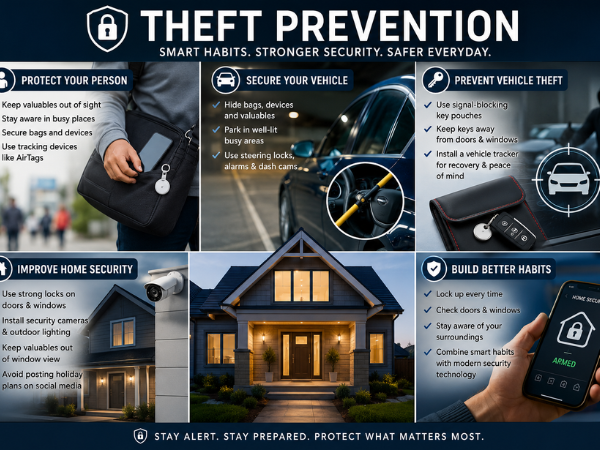
Keeping valuables out of sight remains one of the simplest and most effective preventative measures. Bags should be kept closed and positioned where they can be seen at all times, while phones and wallets should not be left on tables or unattended in public places.
Awareness also plays an important role. Opportunistic theft often relies on moments of distraction, particularly in busy environments where people may be less alert to their surroundings.
For valuable items such as laptops, tablets or cameras, using tracking technology, like airtags, can provide an additional layer of protection by improving the chances of locating property.
Protecting valuables inside vehicles
Vehicle break-ins are extremely common, particularly when items are left visible through windows. Even relatively low-value possessions can attract unwanted attention if they appear easy to access, also inspiring vehicle damage.
Bags, tools, devices and shopping should always be stored out of sight, ideally in the boot before arriving at the destination rather than afterwards in a car park.
Parking location also matters. Well-lit areas with regular foot traffic are generally safer than isolated streets or poorly monitored car parks. Where possible, vehicles should be parked in secure or monitored locations, especially overnight.
Additional security measures such as steering wheel locks, alarm systems and dash cameras can further discourage theft by increasing the effort and risk involved for criminals.
Preventing vehicle theft
Modern vehicle theft has become increasingly sophisticated, particularly with the rise of keyless entry systems. Relay theft, where criminals intercept signals from car keys inside homes, has become a growing concern for many drivers. Using signal-blocking pouches for keys can help reduce the risk of this type of theft. Keeping keys away from doors and windows also makes signal interception more difficult.
Vehicle trackers are becoming one of the most effective tools for protecting cars, vans and commercial vehicles. In addition to helping recover stolen vehicles, tracking technology acts as a deterrent by increasing the likelihood of detection and recovery.
For businesses operating fleets, tracking systems provide additional benefits such as location monitoring, route management and security oversight.
Improving home security
Protecting property at home starts with making access as difficult as possible. Secure doors, quality locks and properly maintained windows remain essential first lines of defence.
Outdoor lighting and visible security cameras can discourage opportunistic criminals, particularly when combined with alarm systems or smart home security technology. Even simple measures, such as keeping valuables out of view from windows, can reduce the likelihood of being targeted.
Social media awareness is another increasingly important factor. Publicly advertising holidays or empty homes can unintentionally increase theft risk by signalling when properties may be unattended.
Building better security habits
Many thefts occur because criminals look for the easiest available opportunity. Small preventative measures often make a significant difference by increasing the difficulty, visibility or risk involved.
Good habits such as locking vehicles consistently, checking windows and doors properly, keeping valuables hidden and remaining aware in public spaces all contribute to stronger everyday security.
While no security measure can eliminate risk entirely, combining practical precautions with modern technology creates a far more effective approach to protecting personal property. As theft methods continue to evolve, maintaining awareness and investing in reliable security solutions remains one of the best ways to reduce vulnerability and improve peace of mind.