The hospitality sector has spent the past few years relearning an old lesson. When margins tighten and guests grow more discerning, the difference between a property that thrives and one that limps along is rarely the headline features. It is the hundred small decisions guests never consciously notice, and few of those decisions carry as much weight, quite literally, as the furniture a hotel chooses to put its name behind.
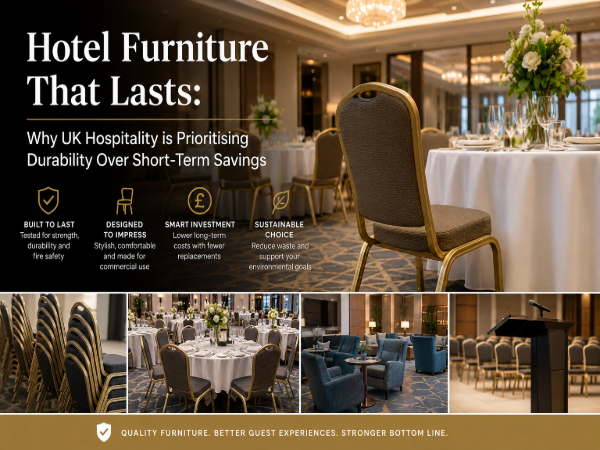
Across the UK, operators are moving away from the buy-cheap-replace-often habit that dominated the previous decade. The reasoning is partly financial. A banqueting chair bought at rock-bottom cost might survive two years of heavy function-room use before the frame loosens or the upholstery gives way. Replace that chair three times over a decade and the supposed bargain has cost more than a single well-made alternative that simply keeps going. Procurement teams have run these numbers, and the conclusion is pushing spend toward suppliers who can prove durability rather than merely promise it.
There is a reputational dimension too. A wobbling chair or a scuffed table leg in a five-star ballroom undermines every other pound the property has spent on service, lighting and food. Guests judge quality holistically, and a single weak link in the room can colour the whole impression. This is why the better venues now treat hotel furniture as a strategic purchase rather than a line item to be squeezed, sourcing from specialists whose products are tested to contract standards and built for years of continuous service.
The testing point matters more than buyers once assumed. Furniture destined for a busy hotel has to meet mandatory requirements for strength, durability and fire safety that domestic pieces never face. A chair used in a banqueting suite may be stacked, unstacked, dragged and sat on by adults of every size several times a day, every day, for years. Reputable manufacturers put their frames through structural and flammability testing precisely because the environment is so unforgiving, and they hold the certificates to prove it. For a hotel, that paperwork is not bureaucracy. It is protection against the day something fails under a guest.
Design expectations have risen in parallel. The market has matured beyond the assumption that commercial-grade means clunky and institutional. Leading British makers now offer twenty or more ranges of stacking chairs, lightweight banqueting tables, lecterns and lounge seating in finishes that would not look out of place in a private members club.The engineering that keeps a chair standing after a decade of abuse is hidden inside a silhouette designed to flatter the room. That combination, genuine durability wrapped in genuine style, is what the top end of the market now demands as standard.
The names on the client lists tell the story. British specialists in this field count some of the world’s most prestigious hotels among their installations, the sort of properties where a single event can involve hundreds of covers and the margin for error is zero. Winning that kind of work is impossible without a product that performs, which is its own quiet endorsement of the durability-first approach.
There is also a sustainability argument that lands well with modern boardrooms. Furniture that lasts ten years rather than three keeps three times as much material out of landfill and cuts the carbon embedded in constant replacement cycles. For operators publishing environmental commitments, choosing pieces engineered to endure is a decision that reads well in a report and holds up under scrutiny. It aligns the accountant, the designer and the sustainability officer behind the same purchase, which is a rare thing in any procurement process.
None of this suggests hotels should simply spend more. The smarter operators are spending differently, redirecting budget toward fewer, better pieces and away from the churn of frequent replacement. In an industry where the guest experience is the product, the furniture beneath it is quietly doing more work than it is ever credited for. The venues that recognise this early are the ones whose rooms will still look right, and still feel solid, long after the trend-led fit-outs around them have been ripped out and started again.