The Rise of Commercial Solar Panels in the UK: Why Businesses Are Switching to Solar Energy

-
Executive Overview
A professional solar energy company supports UK businesses by designing and installing commercial solar panels that reduce electricity costs, improve energy security, and lower carbon emissions. With rising grid prices and available tax incentives, commercial solar panel installation in the UK has become a practical and financially sound decision for many organisations.
Electricity prices across the UK remain unpredictable. For many business owners, uncertainty directly affects profit margins. This is why more companies are exploring commercial solar installation as a long-term cost control strategy rather than simply a sustainability project.
From warehouses and factories to farms and office buildings, solar panels for business are no longer unusual; they are becoming standard practice.
-
Why Commercial Solar Is Growing Across the UK
Several factors are driving the rapid growth of commercial solar in UK:
- High wholesale electricity prices
- Corporate sustainability commitments
- Net Zero targets
- Greater public and investor pressure for responsible operations
Businesses are actively searching for reliable solar energy companies that can offer clear financial modelling and compliant installation services.
Unlike domestic systems, commercial solar panels are designed for higher energy output. They are built to support daytime operational demand, which is when most businesses consume the majority of their electricity.
-
What Commercial Solar Installation Involves
A commercial solar installer manages the full project lifecycle, from the initial assessment to final commissioning.
-
Typical Installation Stages
| Stage | What Happens |
| Site Assessment | Roof inspection, structural review, shading study |
| System Design | Output calculation, panel layout planning |
| Grid Application | Distribution Network Operator approval |
| Installation | Panel mounting, wiring, inverter integration |
| Commissioning | Testing, certification, system activation |
Every step must comply with UK electrical standards and safety regulations. A qualified solar energy company ensures these requirements are met without delays.
-
Costs and Financial Returns
Investment levels vary depending on system size and building type. Below is a general market guide for commercial solar panel installation UK projects:
| System Size | Estimated Cost Range | Typical Annual Savings | Average Payback |
| 30kWp | £30,000 – £45,000 | £6,000 – £8,000 | 4 – 6 years |
| 100kWp | £80,000 – £120,000 | £18,000 – £25,000 | 3 – 5 years |
| 250kWp+ | £180,000+ | £45,000+ | 3 – 5 years |
Most businesses achieve full return on investment within five years. After that, the electricity generated significantly reduces ongoing operating expenses for decades.
-
Grants and Incentives Available
Many business owners ask about commercial solar panel grants or wider solar panel grants.
While direct grant schemes are more limited than in previous years, there are still valuable financial mechanisms available:
-
Smart Export Guarantee (SEG)
Businesses can receive payments for excess electricity exported back to the grid.
-
Annual Investment Allowance (AIA)
Qualifying solar equipment can receive 100% tax relief in the first year.
-
Capital Allowances
Solar installations qualify as plant and machinery for tax purposes.
Some local authorities may also provide additional funding support for energy efficiency improvements.
Before moving forward, a reputable commercial solar installer will review eligibility and calculate realistic projections.
Click here, read more about current UK solar incentives and financial considerations.
-
Why Solar Panels Make Commercial Sense
Most businesses operate during daylight hours – precisely when solar systems generate electricity. This alignment improves self-consumption rates and strengthens financial returns.
Key advantages include:
- Reduced exposure to volatile energy prices
- Lower operational overheads
- Improved ESG reporting
- Enhanced property value
- Greater energy independence
Solar energy is no longer seen as experimental. It is now a mainstream infrastructure decision.
-
Choosing the Right Solar Energy Company
Experience and compliance matter. A professional solar energy company should provide:
- MCS-certified installation
- DNO approval handling
- Detailed performance modelling
- Long-term warranty coverage
- Ongoing maintenance support
Rushed or poorly designed systems can lead to underperformance. Working with established solar energy companies reduces this risk.
-
Supporting UK Businesses with Reliable Solar Solutions
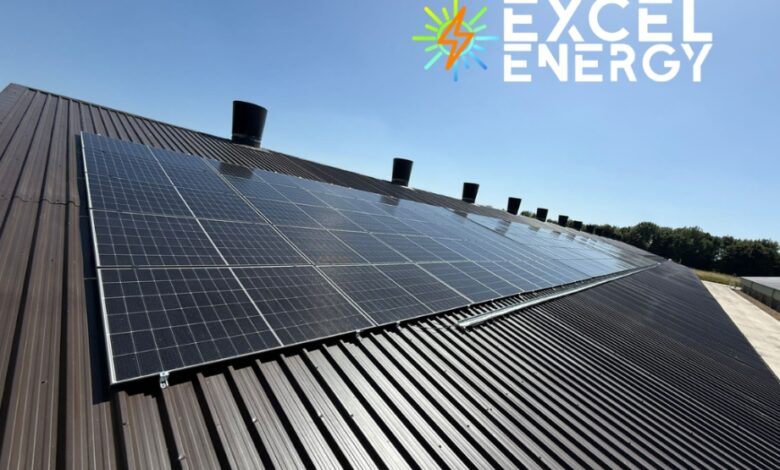
At Excel Energy UK, the focus is on delivering commercial solar panel installation projects that align with real operational energy use. Every system is tailored to the building structure, daily demand profile, and long-term financial objectives.
Excel UK works with industrial sites, farms, warehouses, and commercial facilities throughout the country. The priority is durability, accurate performance forecasting, and clear cost transparency.
Businesses exploring solar panels for business can request a detailed feasibility review before making any commitment.
Click here, read more about recent commercial solar projects delivered by Excel Energy UK.
-
Frequently Asked Questions
-
How long do commercial solar panels last?
-
Most systems operate effectively for 25 to 30 years, with inverters typically replaced once during that period.
-
Will installation disrupt operations?
Installations are planned carefully to minimise disruption. In most cases, daily business activity continues as normal.
-
Is battery storage required?
Not necessarily. Many commercial solar installations achieve strong returns without battery systems, especially when daytime consumption is high.
-
Do all businesses qualify for incentives?
Eligibility depends on company structure and tax position. A financial assessment should be completed before installation.
-
Making an Informed Decision
Commercial solar installation in the UK continues to gain momentum because it offers measurable financial and operational benefits. With electricity costs unlikely to fall significantly in the long term, many businesses now view solar infrastructure as a protective investment.
Working with a qualified solar energy company ensures the project is compliant, financially sound, and technically robust.
If you are considering commercial solar panels, the next step is to review your building’s suitability and projected savings.
Click here, read more or speak with a specialist at Excel Energy UK for a tailored assessment.