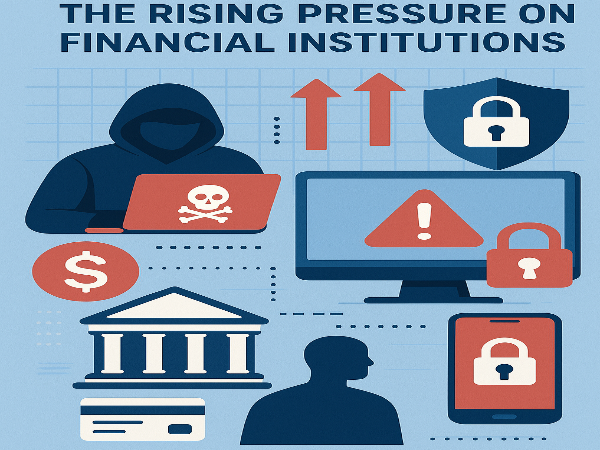
Financial institutions face a sharp rise in targeted attacks. Threat groups focus on data theft, wire fraud, and account takeover. You deal with fast transactions, strict regulations, and large data sets. These conditions give attackers clear incentives.
You also face continuous shifts in customer behavior. More users move to mobile banking. More transactions happen across multiple devices. Each change expands the attack surface.
Security teams report a steady jump in credential stuffing attempts. Several recent incidents involved exposed third party tools. These attacks show how one weak link disrupts operations.
The sector now treats cybersecurity as a front line business issue. Leadership teams demand a full view of risk. They also press for faster response programs and stronger controls.
Why Attacks Target Financial Data
Financial data holds direct monetary value. Stolen login details bring quick profit. Fraud methods grow more advanced each quarter.
Attackers focus on payment systems, loan applications, and customer onboarding flows. These areas involve sensitive records and approvals. Once attackers breach these systems, they move fast. They escalate access and try to hide activity.
Ransomware groups study sector patterns. They strike during holiday periods or high volume trading days. The goal is simple. They pressure institutions to pay.
Fraud rings use automated tools to test accounts. When they find weak authentication, they move funds before detection. Many incidents take minutes from start to finish.
Teams must respond with clear, structured controls. Threat actors adjust fast. You need systems that reduce points of failure.
Growing Importance Of Governance And Controls
Regulators add new controls each year. You now work with tighter reporting rules. You also need stronger monitoring of user access. Many institutions update their financial services information security programs to meet these expectations.
Governance helps you reduce blind spots. It builds structure. It forces consistent processes across teams.
Clear governance does three things.
It assigns accountability.
It sets measurable requirements.
It reduces inconsistent risk decisions.
Institutions that maintain strong governance respond faster to incidents. They also detect suspicious activity earlier.
The rise of third party dependencies makes this even more important. Vendors touch payment tools, identity systems, and cloud environments. You need visibility across these partners. You also need regular reviews of their security posture.
Customers also expect stronger protection. Trust drives adoption of digital services. Without clear controls, you lose confidence in your own systems.
The Shift Toward Zero Trust Programs
Zero Trust approaches continue to gain traction in the sector. The model treats every access request as high risk. It pushes teams to verify users and devices at every point.
Institutions now move identity checks to earlier points in the process. Multifactor authentication helps. Continuous monitoring helps even more. You track behavior patterns. You flag deviations.
Zero Trust programs also reduce lateral movement. Attackers must break multiple controls in sequence. This slows them down. It also gives teams critical time to respond.
The shift requires planning. You review identity systems. You map critical workflows. You update access rules. The work pays off. It builds a clearer path to reduced exposure.
Protecting Transaction Systems
Transaction systems draw direct attention from threat groups. You protect payment gateways, trading platforms, and mobile transfers.
These environments need strict separation of duties. You assign limited access to high risk functions. You monitor high value transactions for abnormal patterns.
Institutions add rate limits. They add behavioral scoring. They add alerts for suspicious transfers. This layered approach stops fraud attempts early. It also reduces false positives.
Strong visibility leads to fewer blind spots. You gain a better view of internal and external threats.
Strengthening Customer Protection
Customers expect simple banking flows. They also expect protection.
Institutions add stronger identity checks without slowing users. They guide customers through secure onboarding.
Education also plays a role. You warn users about phishing and fake apps. You show them how to enable extra security settings.
Secure communication channels protect sensitive notices. Encrypted messages reduce interception risk.
Preparing For New Threats
Threat actors continue to study sector systems. They watch market cycles. They adjust tools.
Institutions respond with regular testing. Red team exercises show weak points. Tabletop sessions help leaders plan decisions.
Cloud environments bring new patterns. You monitor access logs. You track configuration changes. You review identity permissions across systems.
Artificial intelligence tools support detection. They spot unusual behavior at scale. They reduce investigation time.
Security teams that update controls stay ahead of emerging threats. This ongoing effort protects data, transactions, and customer trust.