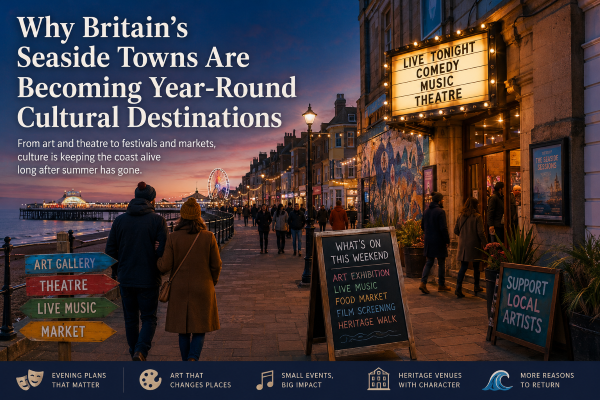
Book a coastal weekend in February and you’re less likely to bank the whole trip on blue sky. In many British seaside towns, the diary is part of the attraction: theatre nights, food events, art trails, comedy, film screenings and markets that keep people moving after summer has gone.
That matters for visitors and residents. A town that only works in school holidays can feel thin for the rest of the year. Add venues, festivals and creative businesses, and the coast feels like somewhere with its own life, not just a sunny backdrop.
The Evening Plan Has Become Part of the Break
A beach walk still has its place, but it doesn’t fill a weekend in January. People want something booked. A performance, exhibition or local event gives the day a shape and takes pressure off the weather.
That’s why local listings matter more than they used to. Visitors checking whats on in Saint Annes may be choosing between a family show, a concert, a market or a community event, not just watching the forecast.
Art Has Changed the Conversation
Margate, Folkestone, St Ives and Hastings show how culture can redraw a town’s image. The beach is still there, but galleries, studios and public art give people reasons to return. A visitor might arrive for a show, then find a record shop or backstreet gallery they’d have missed on a day trip.
The debate around Margate’s art-led renewal shows why this story isn’t simple. Culture can bring attention and investment, but it can sharpen worries about housing, local identity and who benefits. The strongest scenes give local people space to perform, sell and be part of the argument.
Smaller Events Keep the Season Moving
Not every cultural draw needs a headline act. Smaller events often do more for year-round life because they happen often enough to become habits. A seafood weekend, folk session, makers’ market, heritage walk or independent film night can fill the gap left by summer tourism.
These details suit how many people travel now: shorter UK breaks, fewer long plans, and more interest in places that offer food, walking and one memorable event. Folkestone’s public art model pushes that idea further, with the 2025 Folkestone Triennial placing work across streets and harbour spaces.
Heritage Venues Give Culture a Local Accent
Old pavilions, cinemas, piers, bandstands and theatres carry the memory of a place. When they’re repaired and used well, they give new events a setting people already care about.
A touring act in a seaside theatre feels different from the same show in a city venue. The audience may include retired locals, teenagers, families and people who remember the building from decades ago.
The Coast Now Has More Reasons to Return
Before booking a seaside break, check what’s happening after dark and outside peak season. The best trips often pair the old pleasures, a walk, a view, a good bag of chips, with one planned cultural moment.
Britain’s seaside towns are becoming year-round destinations because they’ve stopped asking the beach to do all the work. The strongest places now offer something people can come back for: a night out, a new exhibition, a local festival, and the feeling that the town still has plenty to say.