Why Custom Packaging Line Solutions Are the Key to Scalable Food and Beverage Production

Food and drink manufacturers inquire about productivity and flexibility because of the market’s demand for efficiency. These manufacturers’ Production requirements can become more complex and demand changes more frequently to adding new products to the mix or adapting to varying market needs. This is where solutions to packaging lines (SPL’s) help out. Each modular unit can be configured to individually pack products using the appropriate portioning, sealing, and coding technology required for the product, and then they can be combined for production output of various capacities. Then, the system is unlocking SPL’s potential, with the ability to switch configurations to retain product and production flexibility to adapt from multiple Macro Batches.
The Changing Dynamics of Food and Beverage Production
SPL’s impact is felt because of the diversity in the industry, in part because of the freshness of the consumer, and the growing demand for speed and sustainable production. The ability for line to pack modular production lines to the producers to mix and match products and packaging varieties. Better production cycles under the requirements provided.
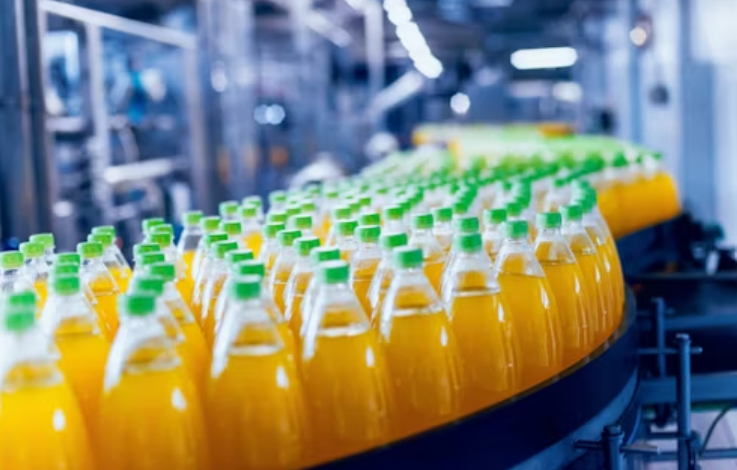
Manufacturers are adapting to this problem by looking for packaging line solutions that are more automated and tailored to their needs. Instead of having different machines perform different tasks, producers can now have systems that are integrated to perform filling, sealing, capping, and labeling in one continuous motion.
For large-scale food producers, this seamless integration of systems means that there will be less manual work, more consistent products, and less downtime. On top of that, it enables rapid changing of products, which is a necessity in a high-paced industry.
The Benefits of Having the Ability to Customize Your Packaging Line Setup
Customization is one of the most important aspects of industrial packaging. No two food or beverage facilities are alike and a one size fits all is not going to work most of the time.
Systems designed for custom packaging are based primarily around the products, the type of containers, and the level of hygiene required. For example, filling lines for liquids have to consider issues with viscosity and the potential for foaming during the filling. On the other hand, systems for dry products require active mechanisms to inject a specific amount. Likewise, different materials such as aluminum, glass, and composites have their own thermal sealing parameters.
By having custom packaging systems, producers avoid bottlenecks in the systems at all levels to ensure that the product is handled in the most efficient and safe manner with the least amount of unnecessary waste.
Custom systems specifically engineered to combine adaptability and efficiency have given operators and engineers the tools to create systems that enhance productivity in ways that were previously thought unattainable. This customized engineering endeavor offers scalability opportunities to businesses, facilitating the incorporation of additional modules or adapting the layout of existing modules.
Incorporating Flexibility and Automation
New automation technologies are essential for achieving the efficiency, repeatable accuracy, and improved throughput needed in today’s packaging lines. Automated systems that fill, cap, and label products help reduce workforce reliance while maintaining error-free operation throughout multiple production shifts.
For high-volume and high-quality B2B producers, automation is indispensable. Servomotors and integrated sensors facilitate real-time performance recording for measurement accuracy, sealing integrity, traceability, and sealing coordination, to help keep the system flowing.
For instance, in the dairy industry, products such as milk powder packaging machines and systems for powder handling are complemented by automated controls to help preserve the accuracy of the dose and the purity of the product. These systems often contain vacuum and air filtration systems for complete food safety.
The automated, flexible, and adaptable systems enable manufacturers to boost production while making the systems easier to use, and this makes for an excellent combination in operational efficiency and productivity for many decades to come.
Hygiene, Quality and Compliance
When it comes to food and drink hygiene consideration is essential and is a foundation to work from. Custom-made packaging has to meet international safety standards and can be designed with easy to clean surfaces, stainless steel, and design to avoid cross over contamination.
Advanced lines with automated cleaning-in-place (CIP) systems as a standard is becoming the norm. They avoid manual cleaning between runs and reduce downtime for the line and keep isolation of the line for food safety. This not only operationalizes lined uptime but consistent safety and safety for each batch.
Also, the Compliance Verification Systems that are incorporated into the packaging machinery allow producers to track and report every step in the process. This for business to business (B2B) customers protects reputational risk and provides assurance in the value chain.
Effective hygiene design with automation provides systems that manufacture vitality. This is a fundamental of long term success in the food industry.
Data Driven Production and Smart Control Systems
The future of the world of work in industrial packaging is certainly in the realm of data. Smart packaging lines paired with sensors, PLC, and IoT are able to track over a dozen parameters. Manufacturers can monitor real-time parameters including fill volume, temperature, and machine uptime.
Operators are now able to control their equipment and adjust settings remotely, and use data to analyze their machinery and prevent breakdowns, and use predictive maintenance to handle unforeseen machine downtime. This maintenance approach will help large operations stretch the lifespan of their machines and enhance the ROI with predictive maintenance tools.
Managers are able to view multiple production sites at once using digital dashboards, and their automated reports and dashboards. This visibility is the most efficient and coordinated for scaling operations at multiple sites.
Business-to-business companies seeking reliability and operational transparency are electronically controlled intelligent systems, and are now a vital part of today’s packaging lines.
The Sustainability Imperative
As sustainability has become a buzz word and trend, the need for good business sense and practices is now a requirement. Food and beverage producers need to control their environmental impact as they are becoming socially responsible.
Custom packaging systems assist in the optimization of materials, energy, and waste, thus supporting the sustainability goals. Advanced automated lines are now able to meet servo motor systems and efficient energy driven motors to eliminate energy waste, without cutting productivity.
In the packaging operations of many manufacturers, recyclable and biodegradable materials are now commonplace. Smart automated machines to handle new materials ensure that resource waste and defect materials are minimized.
These advantages allow sellers to harmonize operational efficiency and environmental sustainability, strengthening their reputation and market positioning on the world stage.
Conclusion
The transformation of industrial automation through technology was encapsulated by the emergence of pack line solutions. Integration of systems, especially eco-design systems, allows food and beverage manufactures to scale with efficiency and market speed.
In B2B enterprises, the installation of modern, flexible packaging lines means more than rapid-speed production; it means gaining a competitive advantage in today’s circulating world.
Custom packaging solutions, from precision filling systems to integrated smart controls, provide the flexibility, reliability, and scalability that define the next level in the world of manufacturing.