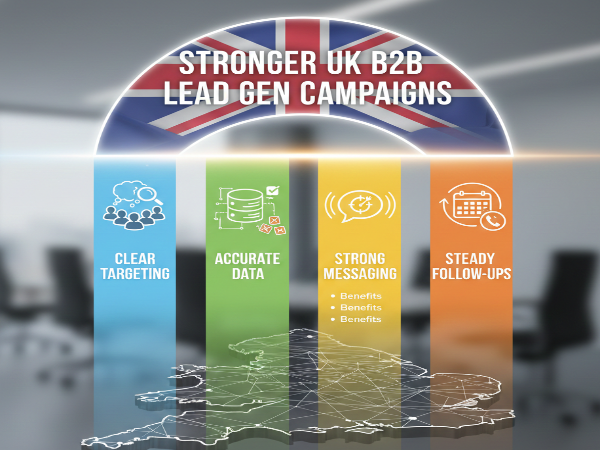
UK businesses are always looking for consistent, qualified leads to drive sales, but many campaigns fall short because the core elements aren’t aligned. Strong B2B results come from clear decisions, proven processes, and practical improvements that keep up with any meaningful change in the sector.
Your campaign becomes stronger when each part supports the next, and when every stage helps you start better sales conversations. Read along to uncover the four factors that drive reliable UK B2B outcomes.
Clear Targeting for Better Conversations
Your targeting choices shape every step of your campaign, so you need to define who you want to reach and why they matter to your pipeline. Many buyers assess suppliers based on fit, so unclear targeting often leads to weaker engagement. When you refine criteria such as sector, team size, buying stage, and challenges, you make it easier to reach people who are ready to talk.
Clear targeting also improves message relevance because you speak to issues your contacts recognise. This stronger focus helps you reduce wasted activity and spend so your team can put time into prospects with real potential.
Accurate Data That Reduces Dead-Ends
High-performing campaigns depend on reliable contact data. B2B teams across the UK still waste hours each week dealing with outdated or incomplete records. They constantly hit dead-ends with leads that were never going to convert into sales. This demotivates your team members and slows down progress.
When your data is accurate, your team spends more time speaking with real decision-makers rather than chasing gaps or correcting errors, and this becomes easier when you use UK B2B lead generation services that maintain clean and reliable records.
When you use professional and proven services for your lead gen needs, you also improve compliance because GDPR rules require clear data hygiene and appropriate contact practices. Strong data supports smoother follow-up and helps you understand who responds, who doesn’t, and what patterns shape future campaigns.
Strong Messaging That Speaks to Buyer Needs
Your messaging must be clear, concise, and aligned with the issues your audience deals with each day. Buyers often respond well to direct language that avoids overselling, and they want to understand value quickly. You strengthen your message when you focus on outcomes, pain points, and the practical benefits your offer brings.
Short, purposeful messages also help your team maintain consistency across phone calls, email outreach, and LinkedIn activity. This aligned message builds trust because prospects hear the same story across every touchpoint and can connect it to their own priorities.
Steady Follow-Ups Builds Trust and Maintain Momentum
Most B2B deals take time, so weak follow-ups often lead to missed opportunities. A structured call and email rhythm helps your team stay present without feeling intrusive. You should aim to stay in the prospect’s mind while still giving them room to decide.
Follow-ups also let you assess interest more accurately because each touchpoint gives you fresh signals. When your team records these steps clearly, you see which patterns lead to booked appointments and which need refinement. This insight strengthens future campaigns and supports a more confident sales pipeline.
Conclusion
Stronger campaigns come from simple, well-managed factors rather than complex ideas. When your targeting is clear, your data is accurate, your messaging is confident, and your follow-up is steady, you give every campaign a stronger base. These improvements help you create outreach that feels relevant and timely, and they support better sales conversations.