Paul Collier: Age, Family, Career, Net Worth and the Economist Behind The Bottom Billion
Discover how Sir Paul Collier rose from a working-class Sheffield background to become one of Britain's most influential development economists, bestselling authors and public-policy thinkers.

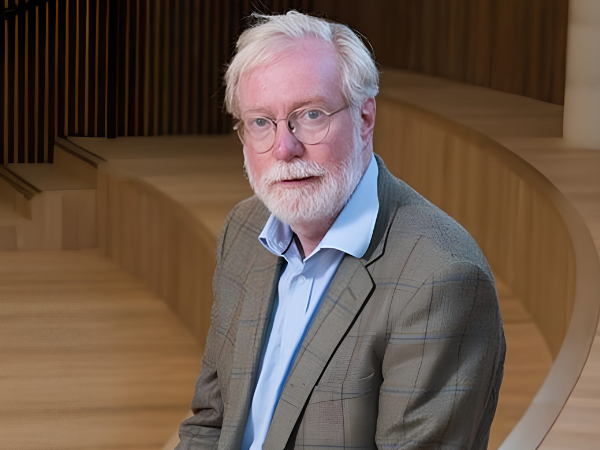
Paul Collier is a British development economist, author and Professor of Economics and Public Policy at the University of Oxford’s Blavatnik School of Government. Born on 23 April 1949, he is 77 years old in 2026. He is best known for The Bottom Billion, his research on poverty, conflict and economic development, and his work advising governments and international organisations. He has also served as Director of the World Bank’s Development Research Group and remains a Director of the International Growth Centre (IGC).
Who Is Paul Collier?
Sir Paul Collier is an internationally recognised development economist whose career has concentrated on one fundamental question: why do some countries and regions remain poor while others manage to achieve lasting prosperity?
At Oxford, his research has covered economic development, fragile states, natural resources, migration, urbanisation, democracy and regional inequality. His work combines academic economics with practical public policy, which has helped make him influential well beyond universities.
Collier is also a prolific author. His books have examined poverty in developing countries, the political consequences of natural resources, migration, capitalism and the economic decline of neglected regions.
Early Life and Background
Growing Up in Sheffield
Paul Collier was born in Sheffield in 1949 and grew up in a working-class family. His background was a long way from the elite academic environment in which he would eventually build his career.
His parents had both left school at the age of 12. Collier later recalled that moving from a state school in Sheffield to Oxford was a significant cultural and intellectual transition.
His family history has also influenced his thinking. His father was a butcher, while his wider family included German ancestry. These experiences contributed to Collier’s interest in social mobility, inequality and the different opportunities available to people depending on where and how they grow up.
Education
Collier attended King Edward VII School in Sheffield before going to the University of Oxford, where he studied Philosophy, Politics and Economics.
He subsequently completed a D.Phil at Oxford. His education provided the foundation for a career that would combine rigorous economic research with questions about politics, institutions and human behaviour.
That combination has remained a defining feature of his work. Rather than treating economics as a purely mathematical discipline, Collier has repeatedly explored how institutions, culture, conflict and political incentives influence economic outcomes.
Career Journey
Oxford and International Development
Collier established himself as an academic economist at Oxford, developing particular expertise in African economies and development policy.
One of the most significant chapters of his career came between 1998 and 2003, when he took five years of public-service leave to become Director of the World Bank’s Research Development Department, also described in other sources as the Development Research Group.
The experience gave him direct exposure to international development policy and the challenges facing poorer countries.
International Growth Centre
Collier later became closely associated with the International Growth Centre, a partnership between the London School of Economics and the University of Oxford.
The IGC currently lists him as a Director alongside his Oxford professorship. His work through the organisation has addressed economic growth, fragile states, infrastructure, natural resources and urban development.
He has also held a role as Professeur invité at Sciences Po and is a Professorial Fellow of St Antony’s College, Oxford.
Major Achievements
The Bottom Billion
Collier’s most famous book is The Bottom Billion: Why the Poorest Countries Are Failing and What Can Be Done About It, published in 2007.
The book examined why a group of extremely poor countries struggled to benefit from global economic growth. Collier highlighted problems including civil conflict, natural-resource dependence, geographical disadvantages and weak governance.
The book transformed his reputation from specialist academic to internationally recognised public intellectual. It also received several major awards, including the Lionel Gelber Prize and Arthur Ross Book Award.
Other Influential Books
His later books broadened his focus. Wars, Guns and Votes examined political instability, while The Plundered Planet explored the relationship between economic prosperity and natural resources.
He subsequently wrote Exodus on migration, The Future of Capitalism on modern economic and social divisions, and Greed Is Dead, co-written with Sir John Kay.
His more recent work, particularly Left Behind, has examined neglected regions and unequal life chances in Britain. Oxford says he advises local and national governments on practical approaches to regional renewal.
Why Is Paul Collier Popular?
Paul Collier’s appeal comes partly from his ability to connect complex economic research with real-world problems.
His writing often addresses subjects that affect ordinary people: poverty, jobs, migration, inequality, regional decline, government policy and economic opportunity. He has also been willing to challenge established assumptions within economics and public policy.
His research increasingly focuses on how struggling places can rebuild their economies. This has brought his work on international development into conversation with Britain’s own regional inequalities.
Personal Life
Paul Collier Family
Information about Paul Collier’s private life is relatively limited, but some details are publicly documented.
Collier is married and has children. Trinity College Oxford notes that all three of his children were baptised in its chapel, reflecting his longstanding connection with the college.
He has also spoken publicly about family responsibilities and the importance of family life. In interviews, he has discussed raising children and the experiences that shaped his understanding of inequality and social opportunity.
His family story has also intersected with his public thinking. Earlier reporting described how Collier and his wife adopted two of his cousin’s grandchildren, an experience that became part of the personal background to some of his writing about social disadvantage.
Paul Collier Age
How Old Is Paul Collier?
Paul Collier was born on 23 April 1949, making Paul Collier age 77 in 2026.
His long career has therefore spanned several generations of economic and political change. From his early research on African economies to his recent work on Britain’s neglected communities, his interests have continued to evolve.
Paul Collier Net Worth
What Is Paul Collier’s Net Worth?
There is no reliable publicly verified figure for Paul Collier’s net worth.
Unlike some business leaders and entertainers, Collier has not publicly disclosed a personal fortune, and reputable academic and institutional biographies do not provide a net-worth estimate. Claims made on websites without evidence should therefore be treated cautiously.
His income has primarily been associated with his academic career, authorship, speaking and advisory work, but it would be misleading to turn those professional activities into an unsupported personal wealth figure.
Paul Collier Wikipedia
Is Paul Collier on Wikipedia?
Yes. Paul Collier has a Wikipedia biography covering his background, academic career, development economics research, books and major appointments.
However, Wikipedia should ideally be treated as a starting point rather than the sole authority for biographical information. For important details, institutional sources such as Oxford, the International Growth Centre and the World Bank provide stronger evidence.
Interesting Facts
- Paul Collier was born and raised in Sheffield.
- His parents left school at the age of 12.
- He studied Philosophy, Politics and Economics at Oxford.
- He spent five years working at the World Bank.
- The Bottom Billion became his best-known book.
- He was awarded a CBE and later knighted in 2014 for services connected with research and policy change in Africa.
- He has been a Fellow of the British Academy.
- His research has increasingly turned towards regional inequality and neglected places in Britain.
- His work continues to connect academic economics with practical government policy.
Future Plans or Current Work
Paul Collier’s current work remains focused on economic development and public policy, particularly regional renewal, inequality, African development, taxation and economic opportunity.
In August 2026, he published an Oxford commentary on Andy Burnham’s devolution plans, arguing that communities need a genuine stake in shaping their economic future. This reflects his broader interest in giving neglected places the capacity to renew themselves.
There is also an important transition ahead. The Blavatnik School of Government has announced that Professor Collier will retire from the School in September 2026, marking the end of a major chapter in his Oxford career.
Conclusion
Paul Collier’s career is a striking example of how academic research can influence public debate and government policy. From a working-class upbringing in Sheffield to Oxford, the World Bank and international development research, his journey has been shaped by a sustained interest in understanding poverty and creating pathways to prosperity.
His best-known book, The Bottom Billion, established him as an influential voice on global development, while later works such as The Future of Capitalism and Left Behind brought his attention increasingly towards inequality, social divisions and neglected communities.
At 77, Paul Collier remains an active contributor to economic and policy debates. Although his exact net worth is not publicly established, his intellectual contribution is far easier to measure: decades of research, influential books, international policy work and a continuing effort to connect economics with the realities of people’s lives.