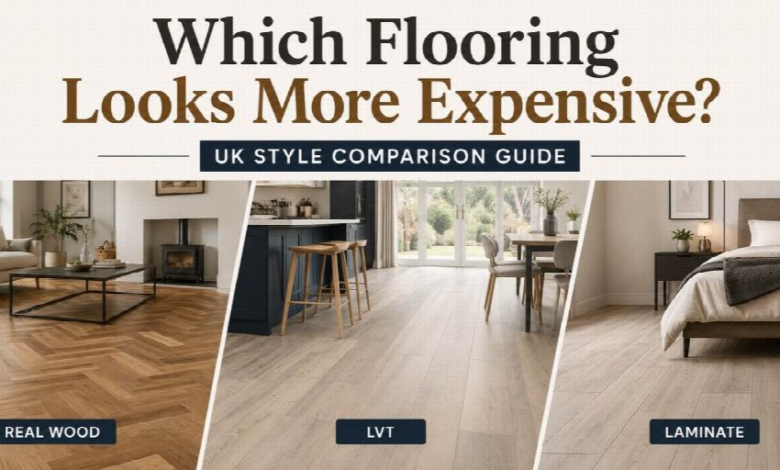
A floor can appear costly without being the highest-priced product in the room. Material authenticity matters, but so do pattern scale, surface texture, colour variation and installation quality. In UK interiors, the most convincing result usually comes from choosing a floor that suits the property rather than selecting the boldest design.
What Creates a Premium-Looking Floor?
Premium-looking flooring tends to show controlled variation rather than obvious repetition. Natural grain, realistic embossing, matte finishes, proportionate board sizes and accurately aligned patterns all influence perceived quality. Clean thresholds and a level subfloor matter too, because poor finishing can undermine an expensive material.
Comparing the Most Expensive-Looking Flooring Styles
The most successful option depends on whether the priority is natural authenticity, decorative impact or a convincing premium effect within a controlled budget.
Engineered parquet: the strongest luxury impression
Real wood combined with a patterned layout creates depth and natural variation that printed surfaces cannot fully reproduce. A well-installed
engineered parquet floor can suit period properties, formal living rooms and design-led open-plan spaces. The pattern requires accurate setting-out, and the board dimensions must suit the room.
Wide-plank engineered oak: understated and premium
Straight oak boards can look more expensive than a complex pattern when the room needs visual calm. Wider planks reduce visible joins, while a natural matte finish allows the grain to carry the design. Excessively uniform colour or high gloss can make the result feel less authentic.
Herringbone LVT: the strongest value-led alternative
Good herringbone luxury vinyl flooring can create a structured, high-end look in busy rooms where real wood may not be the most practical choice. Realism depends on print quality, surface texture, bevel detail and pattern scale. Repeated knots or poor alignment can quickly reveal a printed surface.
High-spec laminate: polished with restrained detailing
Modern laminate can create an attractive wood effect in bedrooms, studies and dry living areas. Stronger designs use low-sheen surfaces, subtle grain and bevels that match the printed plank. Grey washes, heavy gloss and obvious repetition may make lower-quality products appear dated.
Large-format porcelain: strongest for a stone effect
Porcelain can look highly refined when the tile scale suits the room and grout joints are narrow and consistent. Repetitive marble prints or poorly matched veining can weaken the illusion of natural stone.
Details That Can Make Good Flooring Look Cheap
Poor transitions, visible subfloor movement, mismatched trims and interrupted patterns often affect the result more than material price. Using too many flooring types across connected rooms can also weaken visual continuity.
Which Flooring Looks Most Premium?
Engineered parquet usually creates the richest and most authentic impression, while wide-plank engineered oak offers a quieter, premium look. Herringbone LVT is the strongest practical alternative where budget or room conditions rule out real wood. The final result depends on proportion, texture and installation—not the product name alone.