Rework remains one of the most persistent drains on construction project performance. Across sectors—commercial, infrastructure, industrial, and residential—teams routinely contend with redesigns, site modifications, material replacement, and schedule extensions caused by errors discovered too late. While rework is often treated as an unavoidable byproduct of complexity, its root causes are frequently preventable. One of the most effective ways to address them lies in the accuracy of 3D CAD models used during planning, design, and execution.
Accurate 3D CAD models have evolved beyond visualization tools. They now serve as foundational data assets that influence decision-making, coordination, procurement, and construction sequencing. When developed and applied correctly, they significantly reduce ambiguity, uncover conflicts early, and align stakeholders around a shared understanding of the project—ultimately minimizing rework and its associated costs.
The True Cost of Rework in Construction
Rework is rarely confined to correcting a single mistake. A dimensional error in a drawing can cascade into fabrication issues, delayed installations, disrupted trades, and strained relationships between project teams. Studies consistently show that rework can account for a substantial percentage of total project costs, often eroding profit margins and increasing risk exposure.
Common contributors to rework include incomplete or inconsistent design documentation, poor coordination between disciplines, late-stage design changes, and misinterpretation of 2D drawings. Traditional workflows that rely heavily on disconnected plans and manual cross-referencing make it difficult to identify these issues early. As a result, many conflicts surface only during construction, when the cost of correction is highest.
Beyond direct financial impacts, rework affects schedules, labor productivity, and safety. Crews may need to demolish and rebuild completed work, materials may be wasted, and compressed timelines can introduce additional risks. Addressing rework, therefore, is not simply about cost savings; it is about improving overall project reliability.
Accuracy as the Foundation of Effective 3D CAD Modeling
The value of 3D CAD modeling is directly tied to the accuracy of the underlying data. An imprecise model can be as problematic as incomplete drawings, creating a false sense of confidence while concealing critical issues. Accurate models, by contrast, provide reliable geometric and spatial information that teams can trust throughout the project lifecycle.
In practice, accuracy begins with disciplined modeling standards. This includes correct dimensions, alignment with survey data, proper representation of tolerances, and adherence to coordinated coordinate systems. When models reflect real-world conditions and design intent with precision, they become dependable references for downstream activities such as detailing, fabrication, and installation.
Many project teams engage specialized 3d cad modeling services at this stage to ensure models meet the level of accuracy required for construction use. When integrated thoughtfully into the design process, these services help transform models from conceptual representations into constructible assets that reduce uncertainty rather than introduce it.
Accurate 3D models also support iterative design validation. Designers can test assumptions, verify clearances, and evaluate constructability long before materials arrive on site. This proactive approach shifts problem-solving upstream, where changes are less disruptive and more cost-effective.
Reducing Design Conflicts Through Clash Detection and Coordination
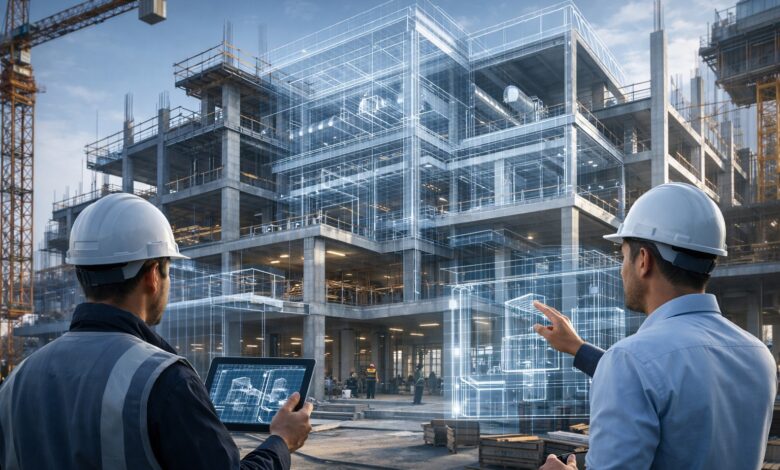
One of the most tangible ways accurate 3D CAD models reduce rework is through effective clash detection. When architectural, structural, and MEP systems are modeled accurately and coordinated within a shared environment, conflicts that would otherwise emerge during construction become visible during design.
Clash detection is only as effective as the models it analyzes. Inaccurate geometry, misaligned reference points, or oversimplified components can generate false positives or, worse, fail to reveal real conflicts. High-fidelity models enable meaningful coordination reviews, allowing teams to resolve issues collaboratively before they reach the field.
Beyond hard clashes—such as a duct intersecting a beam—accurate models help identify soft clashes and workflow conflicts. These include maintenance access issues, sequencing constraints, and spatial congestion that could impede installation. Addressing such challenges early reduces the likelihood of last-minute changes and site improvisation, both of which are common sources of rework.
Improving Cost Control and Schedule Predictability
Rework has a direct and often disproportionate impact on budgets and schedules. Accurate 3D CAD models contribute to better cost control by improving quantity takeoffs, reducing over-ordering, and supporting more reliable cost estimates. When quantities are derived from precise models rather than manual measurements from 2D drawings, the margin for error decreases significantly.
From a scheduling perspective, accurate models support more realistic construction sequencing. Project managers can simulate installation paths, identify potential bottlenecks, and align trade activities more effectively. This level of foresight reduces downtime caused by unforeseen conflicts and minimizes the need for reactive schedule adjustments.
Material waste is another often-overlooked cost of rework. Incorrect dimensions or misaligned components can render prefabricated elements unusable. Accurate models enable tighter integration between design and fabrication, ensuring that components are produced to the correct specifications and fit as intended on site.
Enhancing Communication Among Project Stakeholders
Construction projects involve a diverse set of stakeholders, each with different priorities and technical backgrounds. Miscommunication between these groups is a frequent contributor to rework. Accurate 3D CAD models serve as a shared visual and technical language that bridges these gaps.
For design teams, models provide a clear medium for conveying intent. For contractors and subcontractors, they offer an accessible way to understand complex spatial relationships without relying solely on abstract drawings. Owners and non-technical stakeholders also benefit from improved visibility into the project, enabling more informed decision-making and earlier feedback.
When all parties reference the same accurate model, discrepancies between interpretations are reduced. Coordination meetings become more productive, RFIs decrease, and design changes can be evaluated in context rather than in isolation. This alignment helps prevent misunderstandings that often lead to rework during construction.
Practical Implications for Construction Workflows
On active job sites, accurate 3D CAD models increasingly inform day-to-day operations. Field teams use model-based information to verify dimensions, plan installations, and coordinate with other trades. When models are trusted and up to date, they reduce reliance on ad hoc measurements and assumptions that can lead to errors.
Prefabrication workflows, in particular, depend heavily on model accuracy. Components manufactured off-site must align precisely with on-site conditions. Accurate models enable this alignment, reducing the risk of costly modifications or replacements upon delivery.
Additionally, accurate modeling supports better change management. When design changes are unavoidable, their implications can be assessed quickly within the model, allowing teams to understand impacts on adjacent systems, schedules, and costs. This clarity helps prevent secondary rework caused by poorly evaluated changes.
Long-Term Value Beyond Construction
The benefits of accurate 3D CAD models extend beyond project completion. Models that accurately reflect as-built conditions become valuable assets for operations, maintenance, and future renovations. Facility managers can rely on them to locate systems, plan upgrades, and avoid unnecessary exploratory work that can disrupt operations.
From a lifecycle perspective, reducing rework during construction also contributes to higher overall quality. Fewer compromises made under time pressure result in buildings and infrastructure that perform more reliably over time. This long-term performance reinforces the strategic value of investing in accuracy early in the project.
Conclusion
Rework in construction is not merely a technical problem; it is a systemic issue rooted in uncertainty, misalignment, and late discovery of errors. Accurate 3D CAD models address these challenges by providing reliable, coordinated, and actionable information throughout the project lifecycle. They enable earlier problem identification, improve communication, support cost and schedule control, and strengthen the link between design intent and construction reality.
As construction projects continue to grow in complexity, the strategic importance of modeling accuracy will only increase. Organizations that prioritize accurate 3D CAD modeling position themselves to reduce rework, improve predictability, and deliver higher-quality outcomes—benefits that resonate well beyond a single project.