From Prototype to Mass Production: PCBasic’s PCBA Workflow Explained Step by Step

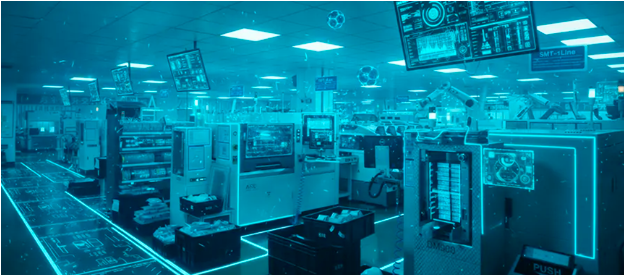
Turning a hardware idea into a fully mass-produced product requires far more than simply assembling components onto a PCB. It requires a clear workflow, stable engineering control, and a manufacturing partner capable of scaling with your design. At PCBasic, we combine advanced SMT technology with a complete end-to-end PCB assembly service to guide customers through every stage—from initial prototype to high-volume production. This article breaks down that workflow step by step so you know exactly how your project moves through the manufacturing pipeline.
Engineering Kickoff & DFM Review
The process starts with data collection: Gerber files, BOM, pick-and-place files, schematics, 3D models, and assembly notes. PCBasic’s engineering team performs a comprehensive DFM/DFA review to ensure the design is suitable for manufacturing.
Key checks include:
Pad and footprint accuracy
Solder mask clearance and manufacturability
BGA and QFN pad design, via-in-pad risk
Polarity/placement orientation
Test-point accessibility for ICT/FCT
PCB panelization recommendations
Early-stage corrections significantly reduce rework, improve yield, and accelerate future mass production.
Quotation & Manufacturing Strategy
Based on the engineering review, PCBasic prepares a transparent quotation that covers PCB fabrication, components, assembly, testing, and logistics. At this stage, the manufacturing strategy is aligned with your product roadmap, typically structured as:
Prototype / Sample Build – small quantities for functional testing
Pilot Run – process validation and reliability verification
Mass Production – stable high-volume output
This ensures your design has a clear path from concept validation to large-scale manufacturing.
Component Sourcing & Material Preparation
For turnkey projects, PCBasic sources components through authorized and trusted channels such as Digi-Key, Mouser, Arrow, and manufacturer-direct suppliers.
Material preparation includes:
BOM validation and lifecycle check
Cost/availability optimization
Anti-counterfeit control with traceable procurement
IQC inspections for packaging integrity, labeling, and MSL requirements
Re-baking moisture-sensitive components as needed
Kitted materials, PCBs, and stencils are stored in ESD-safe areas while engineering prepares the SMT program.
Prototype Build: Fast, Flexible, Feedback-Driven
Prototype builds are treated as engineering runs. The goal is to verify real-world manufacturability and functionality.
During prototyping, PCBasic focuses on:
Footprint accuracy and solderability
Reflow behavior for fine-pitch ICs and BGAs
Assembly challenges in dense areas
Initial functional behavior and power-up safety
Suggestions for design refinement
Rapid turnaround enables customers to iterate quickly and make necessary adjustments before moving to NPI.
NPI Optimization & Process Setup
Before scaling beyond prototypes, PCBasic’s NPI engineers refine key process parameters:
Stencil aperture adjustment for ideal paste volume
Fiducial design and panel frame improvement
Reflow profile optimization for board thickness and component density
Fixture planning for testing and THT processes
Documentation of work instructions and control parameters
This stage ensures that both SMT and downstream operations run consistently and repeatably.
SMT Assembly: Printing → SPI → Placement → Reflow
SMT is the core of modern PCBA manufacturing. PCBasic operates high-speed production lines with automated control at each step.
Solder Paste Printing
Automatic stencil printers ensure precise alignment and paste volume. Paste height, shape, and bridging risk are controlled tightly.
SPI Inspection
3D SPI immediately checks the quality of every paste deposit, preventing defects before component placement.
Pick-and-Place
High-speed machines place components—from 0201 passives to complex BGAs—with accurate feeder verification to prevent mix-ups.
Reflow Soldering
Lead-free SAC alloys are processed through carefully tuned temperature profiles. Nitrogen reflow is available to reduce oxidation and improve wetting for high-reliability boards.
Optical & X-Ray Inspection
Inspection ensures quality throughout the line—not only at the end.
AOI checks for:
Missing, wrong, or misaligned components
Tombstoning or skew
Solder bridges or insufficient solder
Polarity and orientation errors
X-Ray is used for:
BGA and LGA solder joint analysis
Voiding inspection
Hidden pad quality verification
Data from AOI/X-Ray feeds back into process control for continuous improvement.
Through-Hole Assembly & Selective Soldering
Many industrial and power electronics products include connectors, transformers, relays, or large components requiring THT assembly.
PCBasic uses:
Manual insertion for special or delicate parts
Wave soldering for large batches
Selective soldering to protect surrounding SMT components
This ensures strong mechanical joints and long-term reliability.
Testing: ICT, FCT & Reliability Validation
Testing is not optional—it is essential. PCBasic provides a full set of test solutions:
ICT (In-Circuit Test): verifies components and solder joints
FCT (Functional Test): validates performance, interfaces, and signals
Boundary Scan / JTAG: for digital systems and dense boards
Burn-in Testing: for power electronics or high-reliability industries
Customers may provide their own test fixtures, or PCBasic can assist in designing them.
Final Inspection, Packaging & Shipping
Before shipping, each batch undergoes final QC following IPC-A-610 Class 2 or Class 3 standards. Traceability links every board to its production data—PCB lot, component lot, reflow profile, AOI/X-Ray records, and test results.
Packaging options include:
ESD bags or trays
Moisture-barrier bags with desiccant
Bubble-wrapped or foam-protected cartons
Custom OEM packaging upon request
Boards are shipped worldwide according to customer preference.
From Idea to High-Volume Manufacturing—PCBasic Makes It Scalable
Working with PCBasic means partnering with a factory that understands the entire lifecycle of electronics manufacturing. A single workflow from prototype to mass production ensures:
Faster engineering feedback
Lower total cost through optimized processes
Higher yield and reliability
Smooth scaling when your product enters the market
Whether you’re building 5 prototypes or 50,000 production units, PCBasic provides the engineering, manufacturing, and test capability to support long-term success.