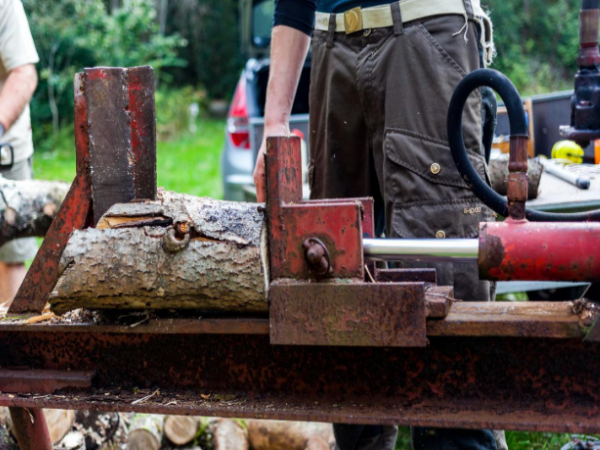
Occasional outdoor chores are easy to absorb into everyday life. A fallen branch gets cleared, the lawn gets trimmed, or a small pile of debris is handled when time allows. These tasks are temporary interruptions, not ongoing responsibilities. Repetitive outdoor work is different. When the same physically demanding tasks return week after week or season after season, they stop being chores and start becoming systems problems. That shift often becomes apparent during planning, when people begin to assess workload, timing, and consistency, sometimes encountering references to capacity-oriented solutions like a 28 ton log splitter as part of a broader effort to reduce repetition rather than simply finish a single job.
The difference between occasional and repetitive work is not just volume. It is the way repetition changes risk, efficiency, and long-term sustainability. Treating recurring outdoor tasks the same way as one-off chores almost always leads to wasted time, unnecessary strain, and declining results.
Occasional Chores Rely on Flexibility
One-off outdoor chores are defined by flexibility. They can be postponed, improvised, or completed with whatever tools happen to be available. If the task takes longer than expected, the impact is usually minor. The body absorbs the effort, the schedule adjusts slightly, and life moves on.
Because these chores are infrequent, inefficiencies rarely stand out. Carrying heavy material by hand or repeating awkward movements feels acceptable when it happens once or twice a year. The cost is mostly short-term discomfort, not lasting disruption.
Repetition Changes the Cost Equation
Repetition exposes everything that occasional work hides. Movements that seemed harmless become sources of strain. Time estimates that once felt reasonable turn into recurring bottlenecks. Small inefficiencies multiply until they dominate the workload.
When outdoor tasks repeat, the true cost is no longer measured in minutes or hours, but in accumulated fatigue and lost capacity. What was once tolerable becomes unsustainable. This is why repetitive work demands a fundamentally different approach, one that prioritizes consistency and recovery over improvisation.
Physical Strain Becomes a Risk Factor
The human body is resilient, but it is not designed for repeated overexertion without adequate recovery. Repetitive outdoor work often involves lifting, twisting, and sustained force, all of which increase injury risk when performed frequently.
The Occupational Safety and Health Administration has consistently identified overexertion and repetitive motion as leading causes of work-related injuries, even outside industrial environments. These risks apply just as clearly to property maintenance and land work. Designing tasks to reduce strain is not an optimization; it is a safety requirement when repetition is unavoidable.
Efficiency Is About Endurance, Not Speed
In occasional chores, speed can feel like efficiency. Finish faster, move on. In repetitive outdoor work, speed without sustainability leads to burnout. True efficiency at this level is about endurance. Tasks must be structured so they can be repeated reliably without degrading performance or health.
This shift reframes how work is evaluated. The question becomes whether a process can be maintained over months and years, not whether it feels manageable once. Endurance-focused efficiency favors steady output, predictable timelines, and reduced physical stress.
Planning Becomes Essential, Not Optional
Repetition forces planning to the forefront. When the same task appears regularly, guessing and reacting become costly. Planning allows work to be sequenced properly, resources to be staged in advance, and effort to be distributed evenly.
This does not require complex systems. It requires awareness. Understanding when tasks recur, how long they realistically take, and where the biggest energy drains occur transforms repetitive work into a controlled routine. Without planning, repetition turns into frustration.
The Difference Between Getting Through It and Managing It
Occasional chores are about getting through the task. Repetitive work is about managing the process. This distinction is subtle but important. Getting through something implies a temporary challenge. Managing something implies ownership and continuity.
When outdoor tasks are treated as processes rather than interruptions, decision-making changes. Choices are evaluated based on how they affect the next cycle, not just the current one. This long-view perspective is what separates sustainable property care from constant catch-up.
Small Improvements Compound Over Time
One of the advantages of addressing repetitive work thoughtfully is the compounding effect of small improvements. Reducing unnecessary movement, improving staging, or refining sequencing may save only a few minutes per cycle. Over dozens of repetitions, those minutes become hours, and those hours become reduced fatigue and greater consistency.
This compounding effect works in both directions. Poor processes also compound, increasing strain and eroding motivation. Repetition magnifies whatever approach is chosen, which is why it demands more careful design.
Consistency Protects Both Time and Health
Consistency is often undervalued because it lacks drama. Yet in repetitive outdoor work, consistency is protective. It stabilizes schedules, reduces decision fatigue, and makes effort predictable. Predictability allows the body to adapt and recover properly.
From a health perspective, consistent workloads are easier to manage than irregular bursts of intense effort. From a time perspective, consistent routines prevent tasks from ballooning into all-day events. This balance is central to sustainable outdoor work.
Stewardship Over Short-Term Completion
Repetitive tasks are often tied to long-term stewardship of land and property. Clearing, maintaining, and preparing spaces is not just about aesthetics or convenience. It is about preserving function and preventing larger problems.
The U.S. Department of Agriculture emphasizes proactive land management as a way to reduce erosion, manage vegetation responsibly, and maintain usable landscapes. These principles apply at any scale. Repetitive work, when managed thoughtfully, supports stewardship rather than depleting resources.
Rethinking the Approach
The mistake many people make is assuming that if a task is manageable once, it will remain manageable indefinitely. Repetition disproves that assumption. What works for occasional chores rarely scales into a sustainable routine.
Recognizing the difference early allows for adjustment before fatigue and frustration set in. By shifting focus from completion to continuity, repetitive outdoor tasks become easier to manage and less disruptive over time. The work does not disappear, but it becomes predictable, safer, and more aligned with long-term capacity. That shift in approach is what transforms repetitive labor from a burden into a manageable part of property care.